Why Is Consumer Automation Important for Global Buyers?
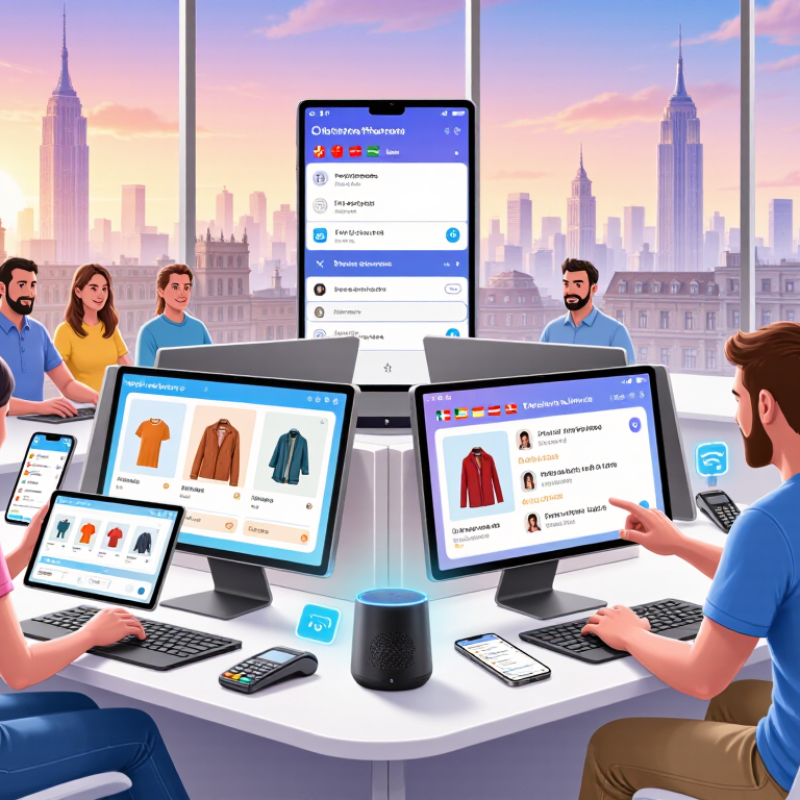
Global buyers now expect online shopping to feel immediate, relevant, and trustworthy. Consumer automation helps deliver that experience across languages, time zones, and purchasing channels. It can recommend products, answer routine questions, track orders, and simplify checkout within seconds. The detail is practical: a buyer in Singapore may receive prices in local currency, while a shopper in Germany sees translated product information and familiar payment options.
Industry data shows why this matters. McKinsey’s “The Future of Personalization” report found that 71% of consumers expect personalized interactions, while 76% feel frustrated when companies do not provide them. Salesforce’s State of the Connected Customer report also highlights rising expectations for connected, consistent experiences across touchpoints. These findings support a clear business case for consumer automation. Better relevance can reduce search effort, improve engagement, and support international conversion.
Yet automation is not a magic switch. It can misread intent, recommend unsuitable products, or create frustration when customers need human judgment. That limitation matters. Global buyers may face different cultural preferences, accessibility needs, currencies, and delivery conditions. Companies should therefore combine automated tools with transparent policies, secure data practices, and responsive human support. Report findings also vary by market and research method, so businesses should test results locally rather than copy one global formula. Used carefully, consumer automation becomes more than a technology upgrade. It becomes a practical way to make international buying clearer, faster, and more dependable.
What Consumer Automation Means in Global Purchasing
Consumer automation in global purchasing means software that turns a buyer’s needs into practical actions. It connects product discovery, language conversion, currency calculation, delivery estimates, and payment checks. For a shopper in Singapore buying from Turkey, the system might compare sizes, convert prices, and flag an unusually high shipping fee. Not just a chatbot.
UNCTAD reported that digitally delivered services exports reached about 4.25 trillion dollars in 2023, increasing 9% year on year. This growth shows how purchasing is becoming more digital and borderless. The World Bank’s Global Findex 2021 found that 76% of adults worldwide held a financial account, compared with 51% in 2011. That matters. More connected buyers need clearer automation, not simply faster checkout pages.
Automation can compare total landed costs, identify missing address details, and recommend safer delivery windows. A useful interface should show why it made each recommendation. In practice, a buyer may reject an item because the return route is unclear. Yet automation is not automatically intelligent. A translated size chart can still misread local measurements. A low price can hide duties or fragile packaging. Data quality remains decisive. A missing country code can delay an otherwise perfect order. The imperfect part is important: systems may over-personalize or make confident mistakes. Human review still has value, especially when product information changes quickly.
Why Global Buyers Need Faster and Smarter Buying Processes
Why Is Consumer Automation Important for Global Buyers?
Why Global Buyers Need Faster and Smarter Buying Processes
Global buying rarely happens in a single time zone. A customer may compare prices at midnight, request delivery updates at dawn, and expect an answer within minutes. Consumer automation keeps these moments connected. It can sort product questions, check order details, and route unusual requests to trained staff.
Speed matters, but speed alone is not enough. A smart buying process uses clear product data, local payment options, and accurate delivery estimates. It should also recognize language differences and regional preferences. In practical projects, teams often reduce repeated manual checks by using automated approval rules. Buyers receive quicker responses, while employees focus on exceptions that require judgment.
Automation is not magic. Poor data creates confident mistakes. A wrong stock figure can disappoint a customer thousands of miles away. A rushed rule may also ignore accessibility needs or local purchasing habits. Human review remains important for refunds, sensitive complaints, and unclear orders. The strongest systems record each decision, protect customer information, and allow staff to correct errors quickly. Small details matter. A visible delivery window, a simple status message, and one clear next step can make global purchasing feel considerably less uncertain.
Key Technologies Behind Consumer Automation
Why Is Consumer Automation Important for Global Buyers?
Key Technologies Behind Consumer Automation
Consumer automation connects daily tasks with intelligent digital systems. Artificial intelligence helps devices recognize habits, predict needs, and adjust settings. Internet of Things sensors collect information from rooms, appliances, and personal devices. Cloud platforms then process this data across locations and time zones. Edge computing adds speed by handling urgent commands near the device.
Robotics and voice interfaces make automation more practical. A sensor can detect an open window and adjust indoor controls. A smart assistant can translate instructions for users with different language preferences. Secure application programming interfaces allow devices to work together. However, automation is not magic. Systems can misunderstand accents, lose connectivity, or respond poorly to unusual routines. Human control still matters, especially when data accuracy affects comfort, spending, or safety.
Tips: Test automation with real household conditions, not only showroom demonstrations. Check data permissions, offline functions, update policies, and repair access. Choose systems with clear alerts and manual overrides. Buyers should also compare regional compatibility, including voltage, language support, and network standards. Small details often decide whether a product feels reliable. A short trial can reveal more than impressive specifications. Be willing to question convenience when privacy or control becomes unclear.
Benefits of Automation for Buyers, Sellers, and Supply Chains
Why Is Consumer Automation Important for Global Buyers?
Consumer automation connects buyers, sellers, and supply chains through faster, clearer decisions. A buyer can compare prices, check stock, and receive order updates without sending repeated emails. Sellers gain cleaner demand signals and fewer manual entry errors. Warehouses can prepare the right items before a purchase becomes urgent.
The benefits become clearer during busy periods. An automated system may flag a quantity mismatch at 9:00 a.m., before packing begins. It can also match invoices, shipping records, and approved product details. This supports accurate documentation and helps teams follow regional requirements. Supply chains benefit from better forecasting, shorter delays, and fewer avoidable returns. Still, automation is not perfect. A wrong data field can move quickly through every connected process. Human review remains essential, especially for unusual orders or incomplete information.
Tips: Start with one measurable task, such as stock alerts or invoice matching. Check the system’s results weekly. Keep a manual backup for critical orders. Ask buyers and warehouse staff what still causes frustration. Their experience often reveals gaps that dashboards miss. Simple workflows usually perform better than ambitious systems nobody fully understands.
Risks, Limits, and Future Development of Consumer Automation
Consumer automation now moves beyond convenience. Automated translation, payment checks, and household controls shape buying decisions. McKinsey’s 2023 generative AI report estimated that automation could affect 60–70% of employees’ work activities. That estimate is not a consumer forecast. Still, it signals a major shift in how buyers compare products and services. Global shoppers may gain speed, but speed can hide weak choices. A recommendation engine may optimize price while missing safety, repairability, or cultural fit.
Risk becomes personal when systems collect voice, location, shopping, and biometric data. Stanford’s AI Index 2024 recorded 123 AI-related incidents in 2023, up from 51 in 2022. The figure covers many sectors, not only consumer tools. Yet it shows how failures are becoming harder to dismiss. Cross-border buyers also face uneven privacy rules, unclear liability, biased recommendations, and fragile connected devices. Automation can exclude people with disabilities or poor internet access. Human review remains necessary. Sometimes, the machine is simply wrong.
Future development should prioritize traceable decisions, local data processing, strong encryption, and visible manual overrides. Independent testing should measure errors across languages, ages, and income groups. ISO/IEC 42001 supports documented AI governance and accountability. Buyers need plain explanations before accepting automated decisions. They should know what data is used, how long it remains stored, and who can correct errors. Convenience matters. It cannot replace informed consent. Regulation will likely lag behind technical change, and that gap deserves closer scrutiny.
Why Is Consumer Automation Important for Global Buyers?
Global consumer automation depends on digital connectivity. The rising share of people using the Internet expands the potential user base for connected appliances, home assistants, automated security, and other consumer automation solutions. However, adoption still faces limits related to affordability, digital skills, privacy, cybersecurity, and unequal access to reliable networks.
Global individuals using the Internet, 2019–2023 (% of population). Source: International Telecommunication Union, ITU Facts and Figures.