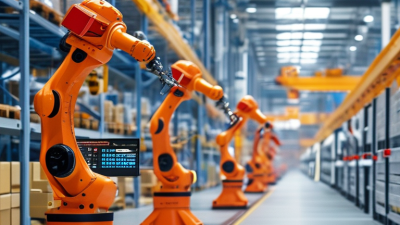
China has become a critical sourcing base for industrial automation, robotics, and smart manufacturing equipment. According to the International Federation of Robotics’ World Robotics 2024 report, China installed 276,288 industrial robots in 2023, representing about 51% of global installations. This scale reflects strong supplier experience, dense component networks, and fast product iteration. It also gives global buyers more choices when they apply automation to welding, assembly, packaging, inspection, and material handling.
This overview introduces ten Chinese automation manufacturers selected for international buyer relevance. The selection considers product capability, export experience, integration services, certifications, after-sales support, and industry coverage. Companies may offer complete robotic cells, PLC control systems, machine vision, servo drives, or customized production lines. Some are highly specialized. Others provide broader turnkey solutions. The global industrial robot market continues expanding, while the IFR also reports that more than four million industrial robots were operating worldwide in 2023. That installed base increases demand for dependable maintenance and software compatibility.
No ranking is flawless. Supplier quality can vary between factories, regions, and project teams. A polished catalog is not enough. Buyers should verify reference projects, cycle-time results, safety documentation, spare-parts availability, and remote support response times. A production line may look efficient on paper, yet fail under dust, vibration, temperature changes, or frequent product switching. This guide therefore focuses on practical evidence rather than brand popularity alone. The shortlisted manufacturers can help global companies reduce manual handling, improve consistency, and build measurable automation plans. However, careful technical validation remains essential before signing a contract.
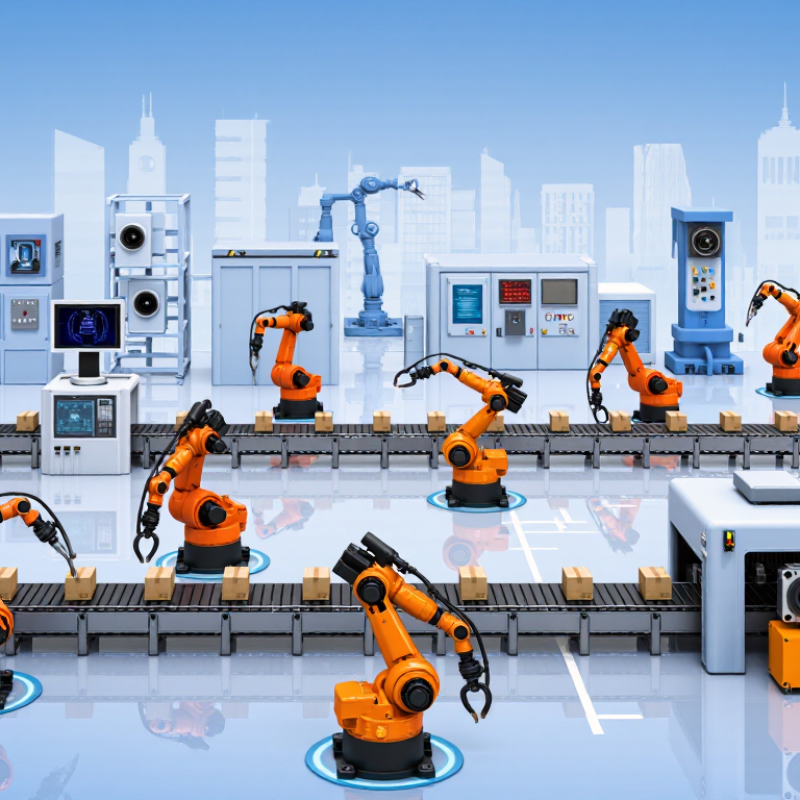
China’s appliance automation manufacturing sector has moved beyond basic assembly lines. It now covers robotic handling, screwdriving, leak testing, machine vision, packaging, and production software. The International Federation of Robotics reported 276,288 industrial robot installations in China in 2023, representing about 51% of global installations. This scale supports broad supplier networks, faster component sourcing, and competitive engineering costs.
However, supplier capability varies sharply. Some factories build complete lines, while others mainly integrate imported controllers and local mechanical parts. Buyers should examine recent project records, control-system documentation, safety validation, and spare-parts response times. A useful factory visit includes watching a test cycle, checking torque readings, and reviewing rejected-product data. Small details matter.
China’s National Bureau of Statistics reported continued growth in industrial robot production during recent years, reflecting expanding domestic automation demand. Yet output volume does not prove engineering reliability. Poorly written software, unclear acceptance criteria, and limited operator training can weaken an otherwise impressive line. The China appliance automation sector is improving, but it is not uniform. Global buyers should compare total ownership costs, not only the initial quotation. Independent factory audits and staged acceptance tests remain sensible safeguards. Mistakes still happen.
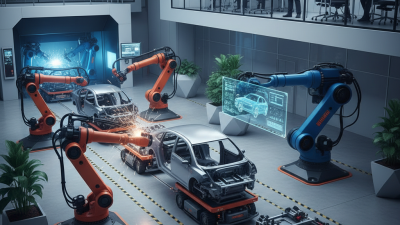
Evaluating application automation manufacturers in China requires more than comparing prices. Start with the production process, not the sales presentation. Ask whether the manufacturer has built similar systems for your product size, speed, and material. Request layout drawings, cycle-time data, and a sample test using your actual components. A factory with skilled engineers should explain tolerances, sensors, software logic, and maintenance access clearly. Vague answers deserve attention.
Check quality systems, component traceability, inspection records, and export experience. Confirm whether the quoted price includes installation, training, spare parts, and remote support. Factory audits can reveal useful details: organized wiring, labeled control cabinets, clean assembly areas, and technicians testing safety functions.
Independent verification is valuable. A polished website can still mislead. My own evaluation would not rely on documents alone; real performance may differ under continuous production. Request a factory acceptance test and define measurable acceptance standards before payment.
Tips: Compare at least three proposals with the same technical requirements. Ask for customer references in your target market. Review software ownership, data security, warranty limits, and response times. Test manual override and emergency-stop functions. Leave room for improvements, because the first design is rarely perfect. Include penalties for delayed delivery, but keep the terms reasonable and legally reviewed.
China’s Top 10 Apply Automation Manufacturers for Global Buyers
China’s top 10 apply automation manufacturers serve packaging, assembly, inspection, logistics, and process industries. Their solutions often combine robotic handling, machine vision, PLC control, and production data tracking. According to the International Federation of Robotics, China installed 276,288 industrial robots in 2023, representing about 51% of global installations. This scale shows strong manufacturing experience, but capacity alone does not prove reliability.
Global buyers should compare these ten manufacturers through measurable evidence. Check factory audits, sample testing, spare-part availability, software documentation, and response times. The International Federation of Robotics also reported China’s operational robot stock exceeded 1.7 million units in 2023. That figure supports China’s technical depth, yet supplier quality can still vary. A ranking is never perfect. Project references may be selective, and some performance data remains difficult to verify.
Tips: Request a live production demonstration, not only a catalog. Ask for cycle-time records, accuracy results, safety certifications, and maintenance procedures. Confirm whether engineers can support installation across borders. The International Organization for Standardization’s ISO 10218 framework is useful when reviewing industrial robot safety practices. Buyers should also test communication between the proposed system and existing equipment. A cheaper quotation may become expensive after integration delays. For serious projects, use acceptance criteria before signing, including uptime, reject rate, training hours, and delivery milestones. Simplicity matters.
| Rank | Anonymous Manufacturer Profile | Core Automation Focus | Typical Equipment | Main Application Industries | Customization | International Compliance | Best Fit for Buyers |
|---|---|---|---|---|---|---|---|
| 1 | Profile A — Integrated Factory Automation | Complete production-line integration and control systems | Robotic cells, conveyors, PLC panels, HMI systems, machine vision | Automotive, electronics, metalworking, general manufacturing | High | CE and ISO-based documentation available by project | Turnkey projects |
| 2 | Profile B — Robotic Assembly Systems | High-speed assembly, handling, and repetitive-task automation | Six-axis robots, SCARA robots, grippers, feeders, safety cells | Consumer electronics, appliances, automotive components | High | Safety design aligned with ISO 10218 principles | High-volume assembly |
| 3 | Profile C — Packaging Automation | End-of-line packaging and material handling | Cartoners, case packers, palletizers, labeling machines, conveyors | Food and beverage, pharmaceuticals, chemicals, logistics | Medium to High | CE support; hygienic design depends on application | Fast packaging lines |
| 4 | Profile D — CNC and Machining Automation | Automated loading, unloading, machining, and inspection | CNC cells, gantry loaders, robotic tending systems, tool monitoring | Precision machining, aerospace components, automotive parts | High | Machine safety and electrical documentation by configuration | Unmanned or lights-out production |
| 5 | Profile E — Vision Inspection Automation | Automated quality inspection and traceability | 2D/3D vision systems, barcode readers, defect detection stations | Electronics, battery manufacturing, medical devices, packaging | High | Validation and data requirements are application-specific | Defect reduction and traceability |
| 6 | Profile F — Warehouse and Intralogistics Automation | Automated storage, retrieval, sorting, and transport | AMRs, conveyors, sorters, automated storage systems, warehouse software | E-commerce, third-party logistics, retail, manufacturing warehouses | High | Safety and system integration depend on site conditions | Large warehouses |
| 7 | Profile G — Welding and Fabrication Automation | Automated welding, cutting, positioning, and fabrication | Welding robots, positioners, laser cutters, fixtures, fume extraction | Structural steel, automotive, agricultural machinery, metal products | Medium to High | Welding and machinery safety requirements vary by market | Consistent weld quality |
| 8 | Profile H — Liquid Filling and Process Automation | Filling, dosing, mixing, batching, and process control | Filling machines, pumps, mixers, dosing systems, clean-in-place modules | Food, beverage, cosmetics, chemicals, pharmaceuticals | High | Hygienic and validation requirements depend on product category | Controlled dosing |
| 9 | Profile I — Assembly and Testing Lines | Sequential assembly, functional testing, and production data capture | Indexing tables, torque tools, test benches, leak testers, MES interfaces | Electrical products, appliances, pumps, industrial equipment | High | Electrical safety and test protocols are project-specific | Quality-controlled assembly |
| 10 | Profile J — Special-Purpose Automation | Bespoke machinery for specialized production processes | Custom fixtures, presses, winding machines, test equipment, robotic modules | New energy, medical devices, electronics, research and development | Very High | Certification depends on machine function and destination market | Unique production requirements |
Note: Capabilities, certifications, lead times, and technical specifications should be verified directly against the final quotation, technical drawings, and destination-market requirements.
China’s top ten application-automation manufacturers are best compared by capability, not export volume. For global buyers, the useful question is simple: which supplier can solve a specific production problem? Their product portfolios commonly include SCARA robots, six-axis robots, delta systems, PLC controls, machine-vision stations, and automated testing equipment. These systems support appliance assembly, electronics, automotive parts, medical devices, food packaging, and warehouse operations.
The International Federation of Robotics reported 541,302 industrial robots were installed worldwide in 2023. It also recorded more than 4.28 million robots operating globally. This demand encourages Chinese manufacturers to combine robotic handling with vision inspection, servo motion, welding, palletizing, and MES connectivity. Strong suppliers provide simulation files, sample-cycle tests, remote diagnostics, spare parts, and local commissioning support. Ask for these details.
However, brochures can flatter reality. A short cycle time may ignore maintenance, operator movement, or rejected parts. Buyers should request a factory acceptance test using real materials. Check safety documentation, electrical standards, software language options, and data ownership before signing. TÜV and ISO-related compliance evidence can improve confidence, but certificates alone cannot prove reliable production.
Tips: Compare total cost over five years, not only the machine quotation. Require a clear uptime target and response time. Visit a similar installation if possible. Small pilot projects often reveal integration weaknesses early.
Choosing among China’s top application automation manufacturers requires more than comparing prices. Buyers should define machine capacity, product tolerances, cycle time, factory space, and after-sales expectations. A supplier that performs well on a sample line may not support stable production at larger volumes. Ask for recent project references, process videos, and a clear equipment scope.
Compliance should be checked before commercial negotiations become serious. Request electrical diagrams, risk assessments, material declarations, and relevant test reports. Confirm whether the equipment can meet the destination market’s safety and labeling requirements. Do not rely on a logo or a copied certificate. Verify the issuing body, document number, testing date, and covered model. Small gaps matter.
Supplier verification needs physical evidence. Check the registered company details, manufacturing address, export history, and quality-control process. A live video audit can show assembly areas, testing stations, spare-parts storage, and serial-number records. Better still, arrange an independent factory inspection. Ask who writes the software, who owns the source files, and how updates are controlled. Clarify warranty response times and technician availability in writing.
Do not rush. Cheap quotations often exclude installation, tooling, training, or replacement parts. Payment terms also deserve careful review. I would compare at least three technically similar offers, although this step is sometimes skipped under deadline pressure. That shortcut can create expensive delays. Record every assumption in the purchase contract, including acceptance tests, production speed, defect limits, and remedies for failed performance.