Who Are the Top Care Automation Suppliers in China?
China’s care automation market includes equipment for hospitals, senior-care facilities, and home-care settings. Suppliers may offer mobile service robots, smart beds, patient-transfer systems, or software that supports daily care tasks. These tools can reduce repetitive work, but their value depends on reliable performance and fit with real care routines.
The phrase “top suppliers” needs careful interpretation. There is no single ranking that suits every buyer. A hospital may prioritize integration with existing systems, while a residential care facility may focus on simple controls, safe movement, and responsive maintenance. That matters. This guide compares suppliers through practical indicators: product range, technical support, customization, documented deployments, and clarity about product limitations. Buyers should confirm specifications directly and request demonstrations under conditions similar to their own facilities.
A product brochure can look convincing. Daily use is the harder test. Staff need clear training, equipment must work in crowded corridors, and service teams should be reachable when faults occur. Publicly available information may also be incomplete or change over time, so any comparison should be treated as a starting point—not a final purchasing decision. The following overview introduces notable Chinese care automation suppliers and highlights what to examine before shortlisting them. It also considers where claims require closer verification, because careful evaluation is more useful than an impressive ranking alone.
What Care Automation Includes in the Chinese Market
What Care Automation Includes in the Chinese Market
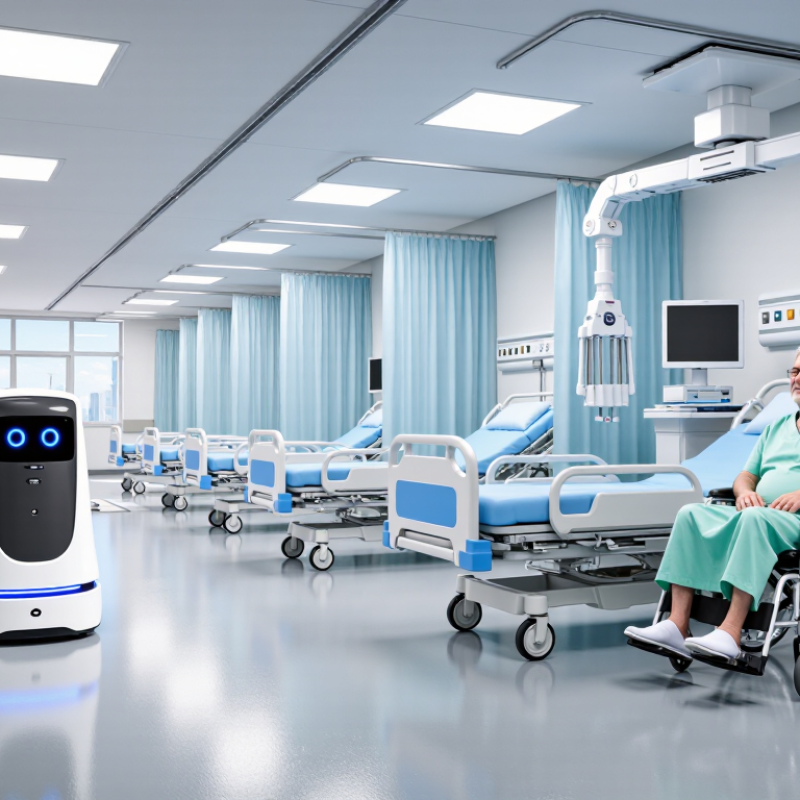
In China, care automation covers more than humanoid robots. It includes rehabilitation equipment, mobility aids, patient-monitoring systems, medication reminders, and automated transport within care facilities. In a ward, this might mean a sensor tracking a patient’s movement while a mobile unit carries linens down the corridor. The National Bureau of Statistics reported that 310.31 million people in China were aged 60 or older in 2024, representing 22% of the population. That demographic shift is increasing demand, but it does not make every task suitable for automation.
The International Federation of Robotics’ World Robotics 2024 report recorded nearly 205,000 professional service robots sold worldwide in 2023, up 30% year on year. Transport and logistics robots accounted for about 113,000 units. These figures cover multiple industries, not care alone. They help explain why hospitals and eldercare facilities are testing automated delivery for meals, supplies, and laundry. Yet moving a cart is simpler than safely helping someone stand.
Care automation also includes software: scheduling, remote observation, and alerts for unusual activity. In practice, systems work best when staff can check alerts quickly and residents retain human contact. The boundary is still messy. A sensor may detect a fall risk, but it cannot fully understand why someone refuses help. That limitation deserves more attention.
How Leading Care Automation Suppliers Are Evaluated
Evaluating leading care automation suppliers in China starts with the care task, not a polished product video. Ask what the system does during medication rounds, room checks, or late-night call response. A credible assessment looks for safe movement around beds, clear alerts, accessible controls, and reliable recovery after network loss. Request a live demonstration using the doors, floor surfaces, and workflow expected at the care site. Watch how staff intervene when a sensor misses someone or a cart blocks the route. Small details matter. Check documented test methods, service response times, spare-part availability, and staff training. A single impressive pilot proves little.
Compare suppliers using measured indicators: completed tasks per shift, false alarms, downtime, and staff minutes saved. Ask for results from facilities with similar resident needs, then confirm references directly where possible. Review personal-data handling, access controls, software updates, and incident reporting; request documentation rather than assurances. Test integration with existing call systems and care records before committing to a long deployment. No scorecard is perfect. Staffing patterns and building layouts can distort comparisons, so record the trial conditions and revisit assumptions after staff have used the system.
Major Chinese Suppliers and Their Core Solutions
Chinese care automation suppliers generally work across four areas: hospital logistics, assisted-living robots, smart beds, and rehabilitation equipment. Logistics integrators automate medicine and meal delivery with mobile robots, elevators, and dispatch software. Care-robot developers focus on mobility support, reminders, and remote communication. Smart-care manufacturers combine bed sensors, fall alerts, and nurse-call systems. Rehabilitation suppliers offer guided training devices and monitoring tools. These are different markets; a strong robotics portfolio does not automatically mean strong elder-care experience.
Demand is expanding as China ages. The National Bureau of Statistics reported 310.31 million people aged 60 or older at the end of 2024, equal to 22.0% of the population. The International Federation of Robotics reported that China installed 276,288 industrial robots in 2023, representing 51% of global installations. That figure indicates broad automation capacity, not care-sector adoption. Procurement teams should assess local service coverage, integration with existing systems, and staff training. A polished demo can still hide weak after-sales support. I would also check how alerts perform in noisy wards, not just quiet test rooms.
Tips: Ask suppliers for pilot results, maintenance response times, and clear limits on what their systems can do. Test workflows with frontline care staff before scaling.
Key Technologies Shaping Care Automation in China
China’s care automation is being shaped by demographic pressure and practical engineering. At the end of 2024, 310.31 million people in China were aged 60 or older, representing 22.0% of the population, according to the National Bureau of Statistics’ 2024 statistical communiqué. That scale increases demand for safer mobility, remote monitoring, and support with daily tasks. Small details matter.
Mobile robots can carry meals or supplies through care facilities, while depth cameras and wearable sensors help detect falls or changes in movement. These tools work best when alerts reach staff quickly; a sensor that nobody checks offers little protection. The International Federation of Robotics reported nearly 205,000 professional service robots sold worldwide in 2023, up 30% year over year, in its World Robotics 2024 service-robot report. That figure covers many sectors, not care alone, so it should not be read as a care-market total.
Voice interfaces and AI-assisted monitoring may reduce routine workload, but privacy, false alarms, and uneven performance across users still need careful testing. No system reads every need well. Care automation should support human judgment, not quietly replace it.
How Care Providers Can Compare Potential Suppliers
Care automation suppliers in China can differ widely in product scope, integration support, and service coverage. Compare how each system handles your actual workflow, not only its demonstration. Ask suppliers to show a full task, such as moving a meal cart between a service area and a resident’s room. Check what happens when a lift is busy, a corridor is blocked, or a device needs manual help. Small details matter. Request written specifications for safety features, compatible systems, maintenance intervals, spare parts, and staff training. A polished demo is not enough.
Tips: Use the same checklist for every supplier. Ask for references from care settings with similar layouts and staffing levels. If possible, run a limited pilot and record task completion, interruptions, staff time, and support response. Keep the measures simple and agreed in advance.
Also assess the people behind the equipment. Who handles installation, troubleshooting, and routine maintenance at your site? Confirm response arrangements, documentation language, and the process for software updates. Ask how the system protects operational and resident information, then have your technical and care teams review the answer. Price matters, but compare the total cost of ownership, including training and service. A pilot can still miss seasonal pressures or unusual cases, so leave room to revise your assessment.