Global buyers evaluating care automation need more than attractive demos and fast payback promises. They need evidence that systems work across languages, staffing models, facilities, and care standards. A bedside voice assistant may reduce routine call-bell requests, yet it can fail when residents speak softly or use regional expressions. A medication reminder may improve schedules, but it cannot replace licensed clinical judgment. These details matter during procurement.
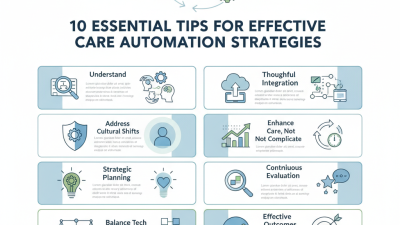
This guide presents ten practical care automation tips for international buyers. It focuses on supplier verification, data protection, interoperability, accessibility, training, maintenance, and measurable outcomes. Each tip connects technology with daily work: a nurse reviewing an alert at 3 a.m., a family member checking a care update, or an administrator comparing response times across sites. Buyers should request pilot results, service-level commitments, clear escalation paths, and realistic total-cost estimates. Independent testing and references from similar facilities can reveal weaknesses hidden in polished presentations.
No system is perfect. Not yet. Procurement teams may overestimate adoption when staff receive limited training or residents prefer human contact. Care automation should support accountable professionals, not obscure responsibility. A careful rollout starts with a defined problem, a small pilot, and feedback from residents, caregivers, clinicians, and technical teams. Results should be measured honestly, including failures, delays, and unintended workload. Global purchasing becomes safer when promises are tested against real rooms, real voices, and real care routines.

Understanding Care Automation and Its Role in Global Markets
Care automation combines digital scheduling, remote monitoring, assistive devices, and robotic support. It does not replace human judgment. It helps care teams manage repetitive tasks, records, and routine safety checks.
The World Health Organization reports that one in six people will be aged 60 or older by 2030. By 2050, the global population aged 60 and above may reach 2.1 billion. This demographic shift increases pressure on hospitals, care homes, and families. Global buyers should therefore assess automation through local needs, not impressive demonstrations. A system must support multiple languages, different care routines, and varied staff skills. It should also connect with existing records securely.
The International Federation of Robotics reported nearly 205,000 professional service robots sold in 2023. However, that figure covers many sectors, not only care. The distinction matters. Buyers should request evidence from comparable care environments. Useful measures include reduced documentation time, faster alerts, fewer missed visits, and staff acceptance. Pilot testing is essential. A device that works in a controlled showroom may struggle beside a crowded hospital bed.
My practical concern is simple: automation can create new work. Staff may spend hours correcting poor data or explaining confusing alerts. Procurement teams should examine training, maintenance, accessibility, and human override functions. The best solution is rarely the most advanced one. It is the one caregivers can trust during a difficult shift.
| No. | Automation Tip | Decision Dimension | Verified Global Benchmark | Buyer Checkpoint | Reference |
|---|---|---|---|---|---|
| 1 | Start with demographic demand | Ageing-related care demand | The global population aged 60 and over was about 1.0 billion in 2020 and is projected to reach 1.4 billion by 2030 and 2.1 billion by 2050. | Prioritize use cases that reduce repetitive workload in home care, residential care, rehabilitation, and remote monitoring. | WHO, Ageing and Health, 2022 |
| 2 | Design for varied abilities | Accessibility and inclusion | Approximately 1.3 billion people, or 16% of the world's population, experience a significant disability. | Require adjustable interfaces, voice and visual alternatives, multilingual support, and accessible physical controls. | WHO, Global Report on Health Equity for Persons with Disabilities, 2022 |
| 3 | Plan for uneven connectivity | Digital inclusion and deployment | About 2.6 billion people remained offline globally in 2023, meaning connected-care solutions cannot assume continuous internet access. | Select systems with offline operation, local data buffering, low-bandwidth modes, and clear synchronization controls. | ITU, Facts and Figures 2023 |
| 4 | Automate tasks, not accountability | Human oversight | For safety-critical care decisions, automation should support professional judgment rather than replace clinical or caregiving responsibility. | Define escalation rules, human approval points, override functions, and responsibility ownership before deployment. | WHO, Ethics and Governance of AI for Health, 2021 |
| 5 | Prioritize interoperable systems | Data exchange and integration | FHIR is an established global healthcare data-exchange standard designed to support structured interoperability through modern application interfaces. | Request documented support for recognized health-data standards, open APIs, export rights, and integration testing. | HL7, FHIR Release 4 |
| 6 | Make privacy a procurement requirement | Personal and health-data protection | Under the GDPR, qualifying personal-data breaches must generally be reported to the supervisory authority within 72 hours after awareness. | Verify encryption, access logging, retention limits, breach procedures, data-location controls, and user-consent workflows. | EU GDPR, Article 33 |
| 7 | Use risk-based AI governance | Algorithmic transparency and risk | Healthcare-related AI may fall into a high-risk category in some regulatory frameworks, which can require risk management, data governance, documentation, monitoring, and human oversight. | Ask for intended-use documentation, validation results, bias testing, performance limits, update controls, and audit records. | EU AI Act, Regulation 2024/1689 |
| 8 | Validate safety before scale | Risk management and reliability | ISO 14971 provides a recognized framework for identifying hazards, estimating and controlling risks, and monitoring residual risks for medical devices. | Require documented hazard analysis, incident reporting, fail-safe behavior, maintenance procedures, and post-market monitoring. | ISO 14971:2019 |
| 9 | Measure outcomes, not activity | Operational and care performance | Automation value is best assessed through measurable outcomes such as response time, missed-care events, user adherence, staff workload, and avoidable escalation. | Set a baseline before deployment and compare results using consistent definitions, time periods, and user groups. | WHO, Global Patient Safety Action Plan 2021–2030 |
| 10 | Calculate total cost of ownership | Financial sustainability | The purchase price is only one cost component; implementation, training, connectivity, cybersecurity, maintenance, integration, regulatory compliance, and replacement must also be considered. | Compare five-year total cost of ownership with quantified labor-time savings, service capacity, safety improvements, and user outcomes. | ISO 15686-5, Life-Cycle Costing |
Note: Global benchmarks reflect the cited publications and regulatory documents. Buyer checkpoints are practical procurement recommendations derived from those benchmarks.