Why Choose a Sock Making Machine for Your Business?
Choosing a Sock Making Machine can reshape how a hosiery business controls quality, speed, and production costs. The decision begins with practical questions. Can the machine handle your yarn types? Can it produce different patterns without lengthy adjustments? Can your team maintain it confidently?
Hosiery machinery consultant Marco Volpi explains, “A reliable machine is valuable because it protects consistency, not simply because it increases speed.” This principle matters on the factory floor. A well-selected Sock Making Machine can produce more uniform cuffs, heels, and toe sections. It can also reduce repeated manual corrections. Fewer defects mean fewer rejected pairs and less wasted yarn.
Automation also creates clearer production data. Operators can monitor output, downtime, and recurring faults. Managers can compare orders with actual capacity before promising delivery dates. These details support steadier planning. They also make quality discussions less subjective.
Still, this is not a magic investment. The purchase price may be only one part of the cost. Installation, software, spare parts, training, and electricity deserve equal attention. A cheaper machine may become expensive when support is slow. A highly advanced model may also exceed a small factory’s real needs.
The strongest choice matches the machine to the business, not to a competitor’s showroom. Consider product range, daily output, available skills, and future growth. A careful trial can reveal problems that brochures hide. That is uncomfortable, but useful. When technology fits the workflow, a Sock Making Machine becomes more than equipment. It becomes a dependable foundation for quality, flexibility, and measured expansion.
What Is a Sock Making Machine?
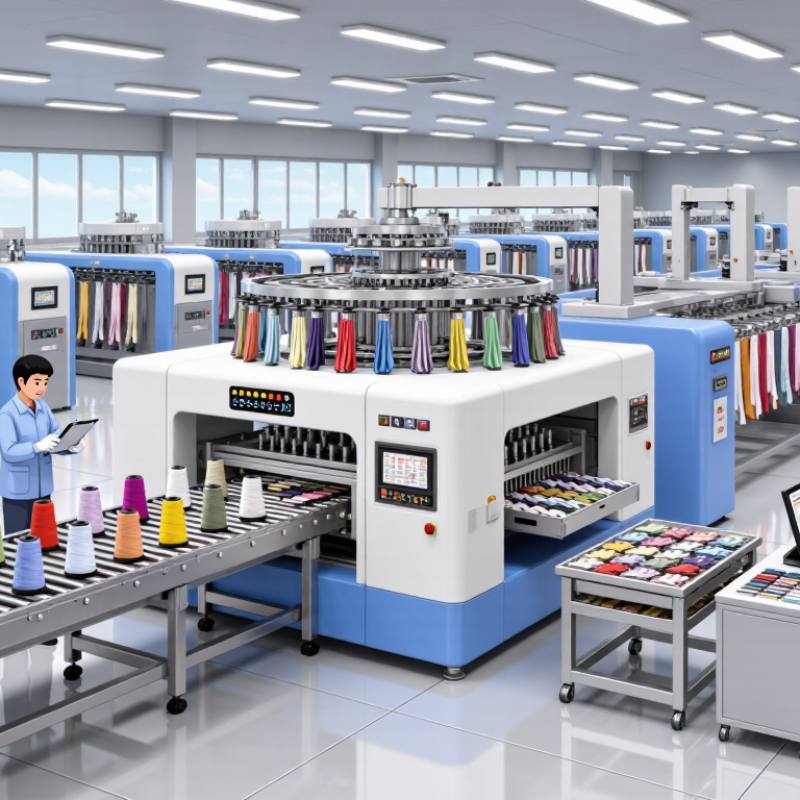
A sock making machine is an industrial knitting system designed to produce socks with controlled speed and consistent sizing. It forms the sock tube directly from yarn, rather than joining several flat fabric pieces. During operation, needles create the fabric, while programmed settings shape the cuff, leg, heel, foot, and toe. Some machines also add elastic yarn for support and ventilation patterns for comfort.
From practical production experience, machine quality depends on more than knitting speed. Yarn type, needle condition, programming accuracy, and daily maintenance all affect the finished sock. A trained operator checks tension, listens for unusual sounds, and examines the first samples closely. Small errors matter. A loose heel or uneven toe can create customer complaints and material waste. The machine can repeat a design accurately, but it cannot correct poor setup by itself.
Modern equipment may support different gauges, patterns, sizes, and fabric structures. This gives a small workshop room to test athletic socks, casual styles, or thicker winter designs. However, higher flexibility often means more training and adjustment time. That trade-off is easy to overlook. Before purchasing, a business should compare output requirements, available floor space, operator skills, energy use, and after-sales technical support. Clear production records also help identify recurring defects and improve reliability over time.
How Does a Sock Making Machine Work?
Why Choose a Sock Making Machine for Your Business?
How Does a Sock Making Machine Work?
A sock making machine turns yarn into a knitted tube through synchronized mechanical actions. Yarn feeders guide threads into a rotating needle cylinder. Needles then lift, catch, and form loops. Sinkers hold the fabric while each new row develops. The machine changes needle movement to create ribs, heels, cuffs, and patterns. A separate toe-closing unit may complete the sock automatically. The process is fast, but not flawless.
Grand View Research reported that the global hosiery market was valued at approximately 96.65 billion dollars in 2023. Its report also forecasts continued growth through 2030. This demand encourages manufacturers to improve speed, consistency, and material control. Textile Exchange reported that global fiber production reached about 124 million tonnes in 2023. Better machine settings can reduce yarn waste during sampling and production. However, savings depend on yarn quality, maintenance, and operator skill. A perfect setup on paper can still produce uneven pressure marks.
Tips: Check yarn tension before running a full batch. Inspect needles and sinkers every shift. Test one sock first. Measure its length, stretch, weight, and toe strength. Small adjustments often prevent hundreds of flawed pieces. Keep production records, even when results look acceptable. They reveal patterns that memory misses.
Why Choose a Sock Making Machine?
How does a sock making machine work? Circular needles knit yarn into a tubular sock shape, while the cylinder needle count helps determine fabric fineness and suitable sock applications.
The chart shows common cylinder needle configurations used in circular sock knitting machines. Lower needle counts are generally suitable for thicker, heavier fabrics, while higher needle counts support finer and more closely knitted fabrics. Actual results depend on yarn size, machine gauge, knitting speed, and sock design.
What Business Benefits Does It Provide?
A sock making machine can convert yarn cones into shaped products with less manual handling. That matters when orders vary by size, color, and pattern. Grand View Research estimated the global hosiery market at approximately US$56 billion in 2023. Growing demand gives small manufacturers a reason to improve output without immediately expanding floor space.
The practical benefit is repeatability. Once settings are tested, each machine can maintain similar stitch density, length, and tension across production runs. Operators can also switch patterns through digital programming, although setup errors still waste yarn. Textile Exchange reported that global fiber production reached 124 million tonnes in 2023. Better control can help reduce avoidable sampling and rejected pieces, especially when materials become more expensive.
Labor efficiency is another advantage. One trained operator may monitor several machines, inspect cuffs, and correct minor faults during a shift. This does not remove the need for skilled workers. It changes their work. Maintenance, needle replacement, and quality checks require attention. A poorly planned purchase can create idle equipment, high training costs, and disappointing returns. Businesses should compare hourly output, power use, maintenance intervals, and defect rates before investing. A machine that runs quickly is not automatically profitable.
Which Features Matter When Choosing a Machine?
Choosing a sock making machine requires more than checking its production speed. The most important features should match your products, workers, and future orders. A machine should support different yarn types, sock lengths, sizes, and patterns. Flexible needle selection matters when producing athletic, casual, or compression socks. A clear control panel also reduces training time and operating mistakes.
Energy use deserves careful attention. The Textile Exchange Materials Market Report 2024 reported that global fiber production reached about 124 million tonnes in 2023. This growing volume increases pressure to reduce waste and resource consumption. Look for machines with stable yarn tension, automatic fault detection, and low material loss. Consistent stitching is valuable too. A fast machine is not useful if it creates frequent defects or expensive rework.
Tips: Ask for a live sample using your own yarn. Measure output, noise, setup time, and rejected socks. Check spare-part availability and maintenance support before purchasing. ITMF’s International Textile Machinery Shipment Statistics shows that machinery demand changes with market conditions, so avoid buying capacity you cannot reasonably use. A cheaper machine may appear efficient, but weak software or difficult maintenance can become costly. I would also leave room for improvement; impressive specifications do not always perform equally on the factory floor.