Choosing the top Micro Switch suppliers requires more than comparing prices or browsing familiar brand names. Global buyers must examine contact materials, operating force, sealing performance, electrical ratings, and production consistency. A switch may look identical in a catalog, yet behave differently after thousands of cycles.
Dr. Laura Chen, an electromechanical reliability engineer with experience in industrial control components, explains, “A dependable Micro Switch is selected by its working environment, not by its label alone.” Her observation is practical. Factory automation may demand precise actuation and long mechanical life. Outdoor equipment needs stronger protection against dust, moisture, and temperature changes. Medical and laboratory devices may require quiet operation and strict traceability.
Details matter.
This guide evaluates leading Micro Switch suppliers through engineering capability, quality systems, customization support, delivery reliability, and global service coverage. It considers established manufacturers, specialist producers, and capable regional suppliers. Buyers should review datasheets carefully, request samples, and test switches inside the final assembly. A laboratory result is useful. Real equipment can still reveal unexpected vibration, alignment, or load issues.
There is no universal “best” supplier. That conclusion may sound less convenient, but it is more honest. A low-cost component can become expensive when field failures interrupt production. Conversely, a premium supplier may exceed the needs of a simple consumer product. The right choice depends on application risk, annual volume, certification needs, and after-sales responsiveness. By comparing these factors openly, purchasing teams can build a stronger shortlist and avoid decisions based only on reputation or quoted price.
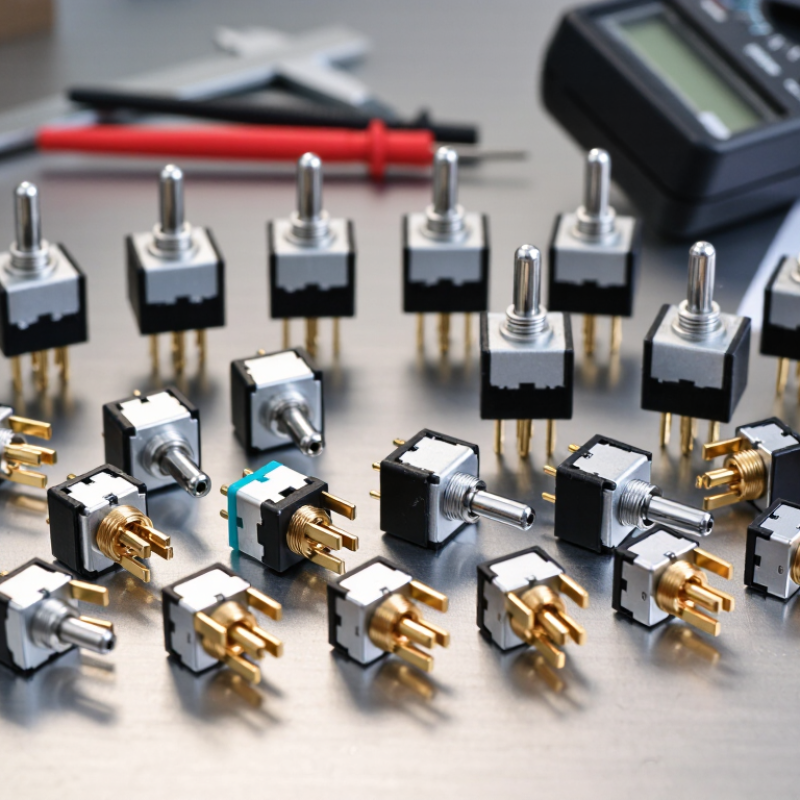
Micro switches are compact, snap-action devices used when a small movement must create a reliable electrical signal. Their mechanism changes state quickly, even when the actuator moves only a few millimeters. According to a 2024 market report by Grand View Research, the global micro switch market was valued at approximately USD 1.1 billion in 2023, with steady growth expected through 2030. Demand comes from vehicles, appliances, automation equipment, and safety controls.
Specification matching matters more than appearance. Check the circuit form, such as SPDT, normally open, or normally closed. Confirm the electrical rating at the actual voltage and current, not only the maximum printed value. Operating force, release force, pre-travel, over-travel, and differential travel affect both touch response and mechanical reliability. A switch may feel precise on a test bench but behave differently inside a vibrating machine. Small details matter.
IEC 61058-1 provides a useful reference for switch safety evaluation. Buyers should also review rated life, contact resistance, insulation resistance, temperature range, sealing level, and terminal style. An IP rating can help in dusty environments, but it does not automatically prove resistance to every chemical or pressure condition. That assumption causes trouble. Supplier documentation should include test conditions, sample size, and failure criteria. Some product sheets remain too optimistic; independent validation is still worth the extra time.
| Category | Specification | Typical Data or Range | What Global Buyers Should Check |
|---|---|---|---|
| Basic Design | Switching mechanism | Snap-action, normally open, normally closed, or changeover contact arrangement | Confirm the required contact logic, terminal configuration, switching direction, and compatibility with the control circuit. |
| Actuation | Actuator type | Plunger, roller lever, simulated roller, hinge lever, or long lever | Select the actuator according to the available mechanical space, object approach angle, travel profile, and required operating force. |
| Mechanical Performance | Operating force | Approximately 0.3 to 5 N, depending on construction and actuator | Verify operating force and release force together. Excessive force may damage the application, while insufficient force can cause unreliable switching. |
| Mechanical Performance | Pre-travel and over-travel | Typically specified in millimetres; values vary significantly by model and actuator | Request the complete movement diagram, including pre-travel, operating travel, over-travel, and reset travel. |
| Electrical Rating | Contact rating | Common low-power ratings range from a few hundred milliamperes to approximately 10 A at low-voltage AC or DC | Check the exact voltage, current, load type, inrush current, switching frequency, and whether the rating applies to resistive or inductive loads. |
| Electrical Rating | Contact configuration | SPST-NO, SPST-NC, or SPDT arrangements are commonly available | Match the number of poles and the normally open or normally closed state to the wiring diagram and fail-safe requirements. |
| Electrical Performance | Contact resistance | Often specified below 100 mΩ when new, subject to test current and contact material | Review the test method and maximum permitted value. Low contact resistance is important for signal circuits and low-voltage applications. |
| Electrical Performance | Insulation resistance | Commonly specified at 100 MΩ or higher under a defined test voltage | Confirm the test voltage, measured terminals, humidity conditions, and minimum acceptance value in the technical datasheet. |
| Durability | Mechanical life | Approximately 100,000 to 10,000,000 operations for different product classes | Mechanical life does not equal electrical life. Compare both figures under the actual operating force, travel, and load conditions. |
| Durability | Electrical life | Often approximately 10,000 to 1,000,000 operations, depending on load and switching conditions | Ask for test-cycle details, load type, switching rate, arc suppression method, and end-of-life criteria. |
| Environmental | Operating temperature | Common ranges include approximately -40°C to +85°C; special versions may extend beyond this range | Consider ambient temperature, self-heating, storage conditions, condensation, and temperature cycling in the final installation. |
| Environmental | Ingress protection | Unsealed versions may have limited protection; sealed versions are commonly available up to IP67 when properly rated | Verify the complete assembly rating, including actuator, terminals, cable entry, mounting interface, and test standard. |
| Materials | Housing and terminals | Insulating engineering plastics with copper-alloy terminals and plated or treated contact surfaces | Request material declarations, flammability information, terminal plating details, and compatibility with the installation environment. |
| Mounting | Terminal and mounting style | Solder terminals, quick-connect terminals, PCB terminals, screw mounting, or snap-in mounting | Confirm terminal dimensions, mounting-hole spacing, panel thickness, connector compatibility, and required tooling. |
| Compliance | Common regulatory requirements | RoHS and REACH declarations; safety approvals may be available for applicable product categories | Request current compliance documents, test reports, marking details, and certificates relevant to the destination market. |
| Quality Control | Production and inspection records | Typical controls include dimensional inspection, contact-resistance testing, dielectric testing, and life-cycle sampling | Evaluate inspection plans, traceability, lot identification, change-control procedures, and corrective-action capability before approval. |
| Supply Chain | Packaging and logistics | Moisture-resistant packaging, batch labeling, carton quantity control, and export documentation | Confirm minimum order quantity, standard lead time, production capacity, packaging specifications, Incoterms, and spare-part availability. |
| Technical Validation | Sample approval process | Drawing review, sample testing, pilot production, and first-article approval | Use application-specific samples and test the switch under actual voltage, current, mechanical travel, vibration, temperature, and contamination conditions. |
Note: The values shown are representative industry ranges for preliminary comparison only. Actual ratings, operating limits, service life, certifications, and environmental performance must be confirmed in the applicable product datasheet and test report.