Industrial manufacturing automation is transforming the way products are created. This process integrates advanced technologies to enhance efficiency and productivity. Automation replaces manual labor with machines and software, allowing faster production times and reduced costs.
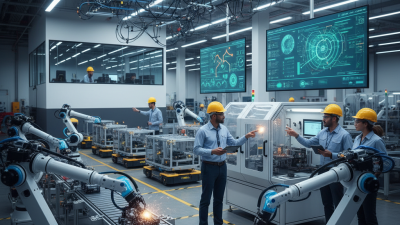
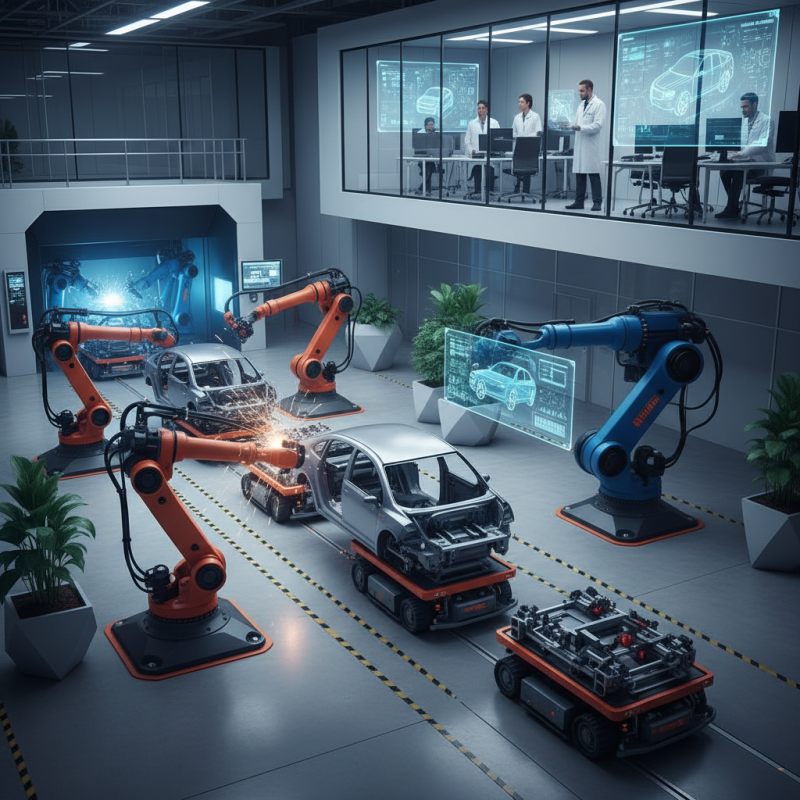
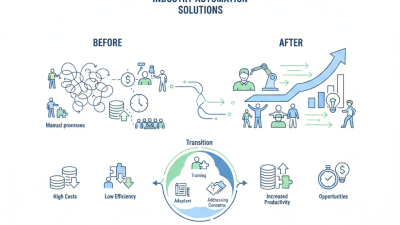
In factories, robotic systems and automated machinery work synchronously. They carry out tasks like assembly, welding, and painting with remarkable precision. However, the implementation of industrial manufacturing automation does present challenges. Companies must adapt their workforce and retrain employees. There are concerns about job displacement as machines take over repetitive tasks.
The benefits of industrial manufacturing automation are clear, yet the transition is not always smooth. Organizations must consider both technical and human factors. The goal is to achieve higher output while maintaining workforce morale. This ongoing evolution requires constant reflection and adjustment to ensure success.
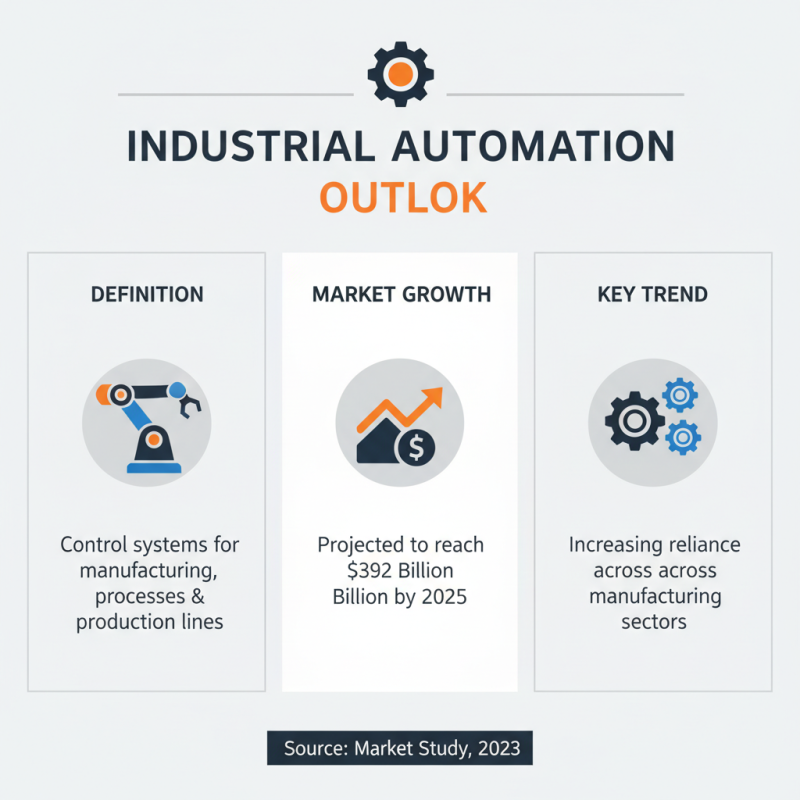
Industrial manufacturing automation refers to the use of control systems for operating equipment in manufacturing facilities. These systems include machinery, processes, and even production lines. According to a recent market study, the industrial automation market is projected to reach $392 billion by 2025. This growth highlights the increasing reliance on automation in manufacturing sectors.
The integration of automation streamlines production processes. It reduces repetitive tasks, lowering labor costs and human error rates. A report from the International Federation of Robotics stated that over 2.7 million industrial robots were operating worldwide in 2020. This number showcases how prevalent automation has become. However, the transition to automated systems can be challenging. Many companies struggle with outdated technology and lack skilled workers.
Also, the implementation of automation does not always guarantee success. There can be issues, such as high initial costs and maintenance challenges. According to McKinsey, only 30% of automation initiatives succeed in achieving their goals. This statistic raises questions about best practices in the industry. Progress in automation requires ongoing evaluation and adaptation. As industries evolve, so must their strategies for managing automation effectively.
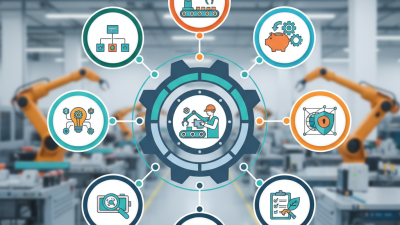
Industrial manufacturing automation is a complex system designed to enhance production efficiency. The key components of these systems play crucial roles in achieving automation objectives. One of the most significant components is programmable logic controllers (PLCs). They are the brains of an automation system. PLCs control machinery based on inputs from various sensors. These inputs can detect status changes like temperature or pressure.
Sensors are another critical element. They provide real-time data, allowing systems to respond quickly. For example, a temperature sensor can shut down a machine if it overheats. This feature prevents costly damage and boosts safety measures. Additionally, motor drives control the speed and torque of machines. Proper tuning of drives can optimize performance, but mistakes can lead to inefficiencies.
Human-machine interfaces (HMIs) are vital for operators. They visualize system data and enable user interaction. A well-designed HMI makes operations smoother. However, poor design can create confusion and errors. Operators need clear information to make quick decisions. Regular assessments of HMIs are necessary to enhance usability. Overall, while these components can provide significant benefits, they require careful consideration and improvement to achieve optimal results.
Implementing automation in manufacturing can transform production efficiency. Companies begin with a thorough needs assessment. They analyze current workflows and identify areas that can benefit from automation. This process often involves collaboration between engineers and operators to understand all angles.
The integration of technologies such as robotics and AI requires careful planning. According to a report by McKinsey, up to 60% of jobs in manufacturing could be automated by 2030. This prediction invites reflection on skill gaps and workforce displacement. Training programs must be developed to upskill employees, ensuring they adapt to new technologies.
Another point to consider is the initial investment in automation systems. Equipment costs can be high, and this raises concerns for smaller manufacturers. A survey conducted by Deloitte shows that 33% of manufacturers worry about ROI on automation investments. Balancing these concerns with the long-term benefits can be challenging. The process of implementing automation thus requires not just financial planning, but also a commitment to adapting company culture.
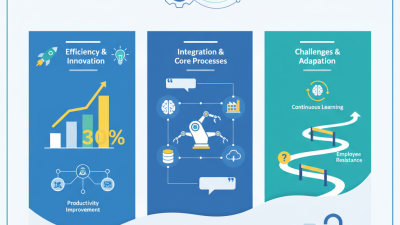
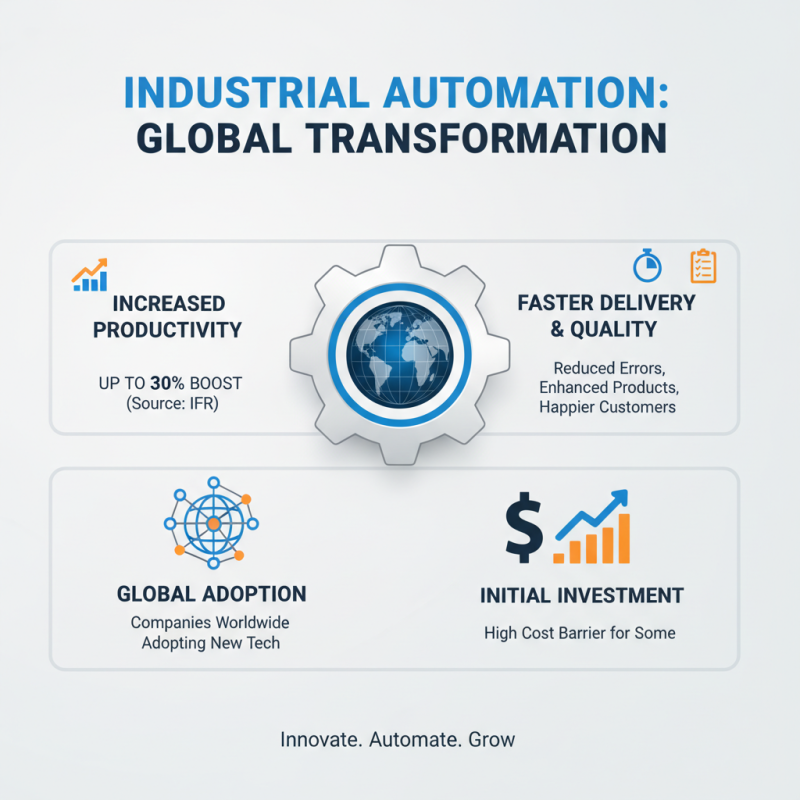
Industrial manufacturing automation is transforming industries worldwide. According to the International Federation of Robotics, companies that adopt automation can increase productivity by up to 30%. This boost enhances production rates, enabling faster delivery times and better customer satisfaction. Automation reduces human error, ensuring a higher quality of products. However, it's crucial to remember that the initial investment can be high, which may deter some companies from making the leap.
Cost savings are another notable benefit. A report from McKinsey highlights that businesses implementing automation can lower operational costs by 20-25% over five years. These savings allow companies to reinvest in innovation or workforce development. However, the integration of automation can also lead to job displacement, raising concerns about workforce adaptation. Companies must invest in retraining programs to address this issue and ensure a smooth transition.
Flexibility is vital in today’s market. Automation technologies, like robotics and AI, can adapt to changing demands. A study from Deloitte found that 80% of manufacturers see flexibility as a top priority. However, some industries may struggle to implement these technologies due to varying operational needs. Therefore, a one-size-fits-all approach may not work. Continuous evaluation and customization of automation strategies are essential to maximize benefits.
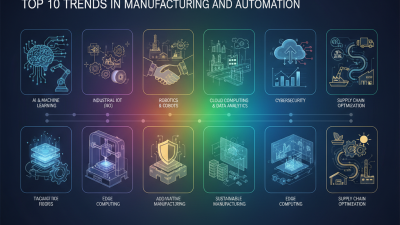
The industrial manufacturing landscape is evolving rapidly with automation technology. According to a recent report by the International Federation of Robotics, automated solutions are expected to grow by 12% annually through 2025. This growth reflects substantial investments in robotics and AI, emphasizing efficiency and safety in production processes.
One significant trend is the integration of advanced machine learning algorithms. These algorithms can optimize manufacturing workflows. Yet, they pose challenges. Data privacy concerns around customer information are a growing worry. Companies must balance innovation with ethical standards. The push for data-driven decision-making can also lead to over-reliance on technology.
Another trend is the shift towards collaborative robots, or cobots. These machines work alongside humans, enhancing productivity. However, training employees to work with these robots poses a hurdle. Not every worker is comfortable with change. Maintaining a human touch in automation is vital. Finding the right balance ensures productivity while safeguarding employee morale. This area requires ongoing reflection and adjustment.
| Automation Technology | Description | Benefits | Future Trends |
|---|---|---|---|
| Robotic Process Automation (RPA) | Use of software robots to automate repetitive tasks. | Increased efficiency, reduced operational costs. | Greater integration with AI for smarter decision-making. |
| Industrial IoT (IIoT) | Network of connected devices that collect and exchange data. | Real-time monitoring and predictive maintenance. | Enhanced data analytics leading to improved operational insights. |
| Additive Manufacturing | 3D printing technology to create complex shapes and structures. | Reduced waste, customized products. | Emergence of new materials and faster printing technologies. |
| Artificial Intelligence (AI) | Integration of AI to optimize processes and decision-making. | Improved efficiency, error reduction. | Increasing use of machine learning for adaptive learning systems. |
| Collaborative Robots (Cobots) | Robots designed to work alongside human workers. | Enhanced safety and productivity. | Increased versatility and ease of programming. |