How to Implement Production Automation for Maximum Efficiency?
In the competitive landscape of modern manufacturing, the importance of production automation cannot be overstated. According to a recent report by McKinsey & Company, companies that implement these systems can see productivity increases of up to 30%. This statistic underscores the significant advantages of automating production processes. However, many manufacturers struggle with the initial setup and integration of automated systems into their workflows.
Industry expert Dr. Jane Thompson, a leading voice in production automation, states, "Automation isn’t merely a tool; it’s a strategy for future-proofing your operations." Her insights reflect a growing recognition that automation is not just a trend, but a necessary evolution for staying relevant. Yet, while the benefits are clear, the journey to full automation is often fraught with challenges, such as employee adaptation and unexpected costs.
Transitioning to automated production requires thoughtful planning and an understanding of the unique needs of each operation. It's essential to recognize that the path to maximum efficiency is not always linear. Companies must be prepared to pivot and learn from setbacks as they embark on this complex journey toward full-scale production automation.

Understanding Production Automation and Its Importance
Production automation is a crucial aspect of modern manufacturing. It streamlines processes, reduces human error, and enhances overall efficiency. Understanding production automation involves recognizing how technology can transform operations. With the right tools, companies can cut down on production time significantly. This transformation helps meet customer demands more effectively.
However, implementing automation is not without challenges. Companies may face resistance from employees who fear job loss. Training is essential to ease this transition. Additionally, businesses must ensure the technology chosen fits their specific needs. Every factory is unique, and one-size-fits-all solutions rarely work. Careful planning and testing are vital.
It’s also important to consider maintenance. Automated systems can experience downtime, which can be costly. Regular checks and updates are needed to keep everything running smoothly. Balancing efficiency with reliability requires ongoing effort. Companies must remain flexible and adapt as needed. In doing so, they can embrace automation’s many benefits while addressing its complexities.
Production Automation Efficiency by Industry
Key Technologies Driving Production Automation
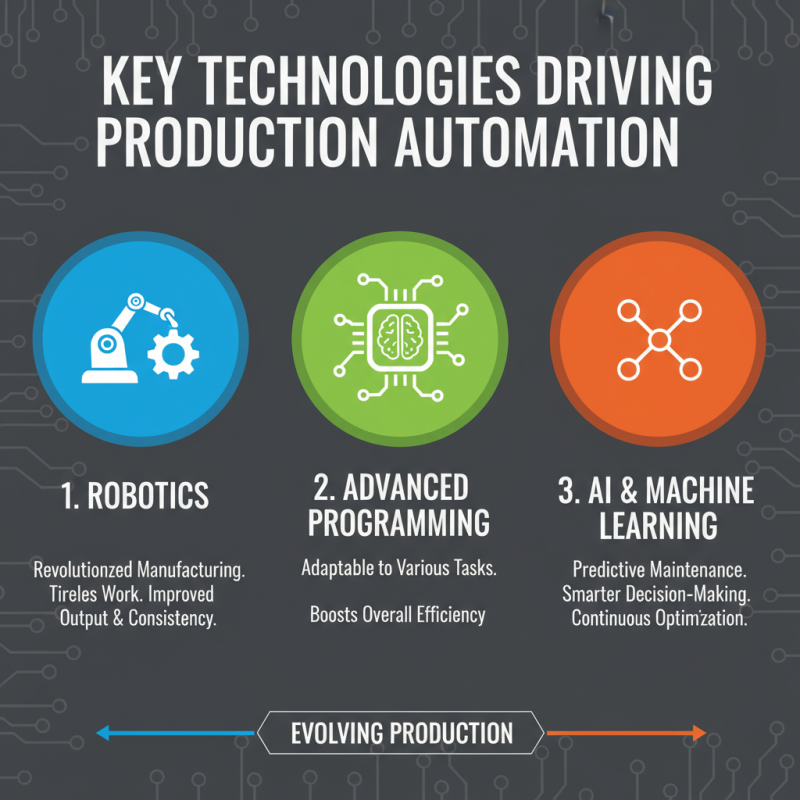
Production automation is rapidly evolving, driven by cutting-edge technologies. Robotics has revolutionized manufacturing. These machines can work tirelessly, improving output and consistency. With advanced programming, robots can adapt to various tasks. This flexibility boosts overall efficiency.
Artificial intelligence (AI) plays a crucial role as well. AI systems analyze data in real-time, allowing for quicker decision-making. This data-driven approach helps identify bottlenecks. However, integrating AI can pose challenges. Organizations often struggle with data quality and integration, requiring a careful assessment of existing systems.
Another key technology is the Internet of Things (IoT). Smart sensors monitor equipment health and production processes. They provide valuable insights to prevent breakdowns. Yet, implementation isn't always seamless. Companies must ensure cybersecurity measures are in place to protect sensitive data. Balancing innovation and security is essential for successful automation.
Step-by-Step Guide to Assessing Automation Needs
Assessing automation needs is crucial for any production facility aiming for higher efficiency. Understanding specific operational bottlenecks can help in crafting a tailored automation strategy. According to a recent report by McKinsey, 60% of tasks in a factory can potentially be automated. Identifying these tasks requires a thorough analysis of workflows and employee feedback.
Engaging with employees directly is essential. They can provide insights into inefficiencies that might not be evident from an upper management perspective. Additionally, it’s important to evaluate existing technology. A 2021 study from Deloitte found that companies that regularly assess their automation capabilities typically see a 20% increase in productivity. However, overlooking the human element can backfire. Over-automation may lead to employee dissatisfaction and a potential loss of skills.
Prioritizing transparency during the assessment process builds trust. Open discussions about benefits and challenges can help shape a realistic automation plan. Tracking improvements post-implementation is vital. Consistent monitoring ensures that the automation aligns with production goals. The journey toward automation should be flexible, ready to adapt based on performance metrics and team input.
How to Implement Production Automation for Maximum Efficiency? - Step-by-Step Guide to Assessing Automation Needs
| Step |
Action Item |
Expected Outcome |
Timeline |
Responsible Team |
| 1 |
Evaluate Current Production Processes |
Identify areas for improvement |
1 week |
Operations Team |
| 2 |
Perform Automation Feasibility Study |
Determine technology requirements |
2 weeks |
IT and Engineering |
| 3 |
Develop Automation Plan |
Outline implementation steps |
1 week |
Project Management |
| 4 |
Select Automation Tools |
Choose the right software/hardware |
3 weeks |
Procurement |
| 5 |
Implement Automation |
Deploy chosen solutions |
4 weeks |
Engineering |
| 6 |
Train Staff |
Ensure team is proficient with new tools |
2 weeks |
Human Resources |
| 7 |
Monitor and Optimize Automation |
Continuously improve processes |
Ongoing |
Operations and Management |
Best Practices for Implementing Automation in Production
Implementing production automation requires strategic planning and careful execution. Start by assessing your current processes. Identify repetitive tasks that can benefit from automation. Gathering data is crucial. This information will highlight areas of inefficiency and reveal potential for improvement. Conversations with your team can uncover insights that numbers alone may miss.
Incorporating automation involves selecting the right tools for your specific needs. Not every technology will fit your operation seamlessly. Sometimes, tools that seem perfect on paper fail in practice. It’s important to pilot new systems before a full-scale rollout. Monitor performance closely during this phase. Identifying glitches early can save significant resources later.
Training your staff is another vital aspect. Automation may increase efficiency, but it can also create anxiety among employees. They need to understand how these changes will impact their roles. Regular feedback sessions can help ease this transition. Encourage your team to share their experiences and challenges with new technologies. Addressing these issues ahead of time can lead to smoother implementation.
Measuring the Success of Automation Initiatives
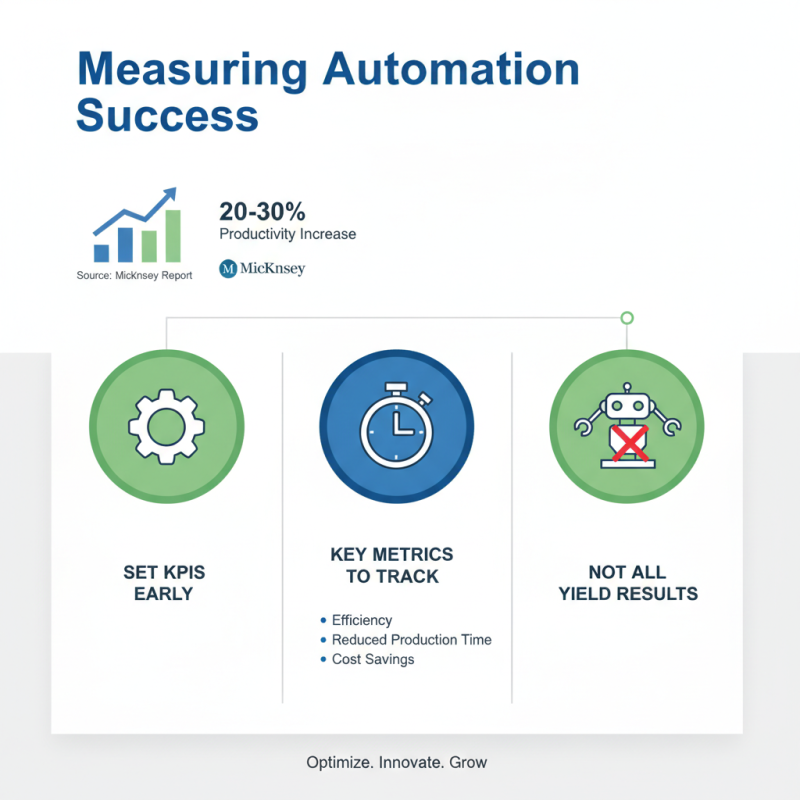
Measuring the success of automation initiatives involves various metrics. According to a recent report by McKinsey, companies that implement automation see a productivity increase of 20-30%. Yet, not all initiatives yield the desired results. It's crucial to identify key performance indicators (KPIs) early on. Track metrics like efficiency, reduction in production time, and cost savings.
Frequent reassessment of these KPIs can reveal gaps. For instance, a decrease in output may suggest that the automation technology is poorly calibrated. Regular feedback loops allow for adjustments. It's essential to engage frontline employees in this evaluation process. Their insights can highlight areas for improvement that management might overlook.
Tip: Start by setting clear goals for automation. Are you aiming for cost reduction or increased throughput? Different goals require different approaches. Involve stakeholders early and often. Understanding their concerns and expectations can help align automation efforts with business objectives.