Skip to content

China Top Safety Lockout Padlocks Wholesale Supplier

Choosing a China Top Safety Lockout Padlocks Wholesale Supplier requires more than comparing prices. It requires practical knowledge of hazardous-energy control, product testing, and workplace behavior. Safety Lockout Padlocks should prevent unauthorized operation during maintenance. They must remain visible, durable, and easy to identify beside a machine.

In real facilities, small details matter. A technician may work beside oil, dust, vibration, or cold metal surfaces. A reliable padlock needs a strong body, a corrosion-resistant shackle, and clear key control. Nylon or thermoplastic options can reduce electrical-conductivity risks. Different colors can separate departments or energy sources. Engraved numbers can improve inspection records. These features sound simple. They can prevent confusion during a rushed repair.

Safety researcher Sidney Dekker wrote, “Safety is the presence of capacity to make things go right.” That idea fits lockout equipment well. A lock alone cannot create a safe system. Workers also need training, written procedures, energy verification, and regular inspections. A responsible wholesale supplier should explain material specifications, test methods, customization limits, and quality-control records. Buyers should request samples before placing large orders. They should check shackle clearance, key operation, labeling, and performance after repeated use.

No supplier should promise perfect protection. That would be careless. Even a well-made padlock can be misused, damaged, or poorly stored. The stronger approach combines dependable products with honest evaluation. This guide examines supplier selection, factory capability, customization, quality assurance, shipping considerations, and practical purchasing questions for professional safety programs.
China Top Safety Lockout Padlocks Wholesale Supplier

What Are Safety Lockout Padlocks?

Safety lockout padlocks are dedicated devices used to isolate hazardous energy during maintenance, cleaning, or repair. Unlike ordinary security locks, they support a controlled lockout/tagout procedure. Each authorized worker normally applies a personal padlock to an energy-isolating device, such as a circuit breaker, valve, or lockout hasp. The lock should remain under that worker’s control until the work is complete. Common features include a durable nonconductive body, a corrosion-resistant shackle, clear identification, and one retained key. Bright colors help visibility, but color alone is not protection.

OSHA’s Control of Hazardous Energy standard appeared among its FY2023 Top 10 cited standards, with 2,554 violations reported. That figure shows a continuing workplace weakness, not merely a purchasing issue. A suitable padlock must fit the isolation point and survive oil, dust, moisture, and repeated handling. In practical inspections, unreadable labels and shared keys create confusion quickly. They should not be treated as minor defects. Group maintenance may require hasps or lock boxes, while personal locks preserve accountability. The wrong lock can delay work or encourage unsafe shortcuts. Procurement teams should verify dimensions, key control, identification space, and site procedures before buying in bulk. The process is not perfect; workers may still misunderstand isolation steps. Regular training and field checks remain necessary.

What Are Safety Lockout Padlocks?

Typical dimensional ranges used when selecting industrial safety lockout padlocks

Safety lockout padlocks are used to secure energy-isolating devices during maintenance and servicing. Their non-conductive bodies, highly visible colors, and durable shackles help identify authorized locks and prevent accidental equipment re-energization. The chart shows representative midpoint values within commonly used industrial specification ranges; exact dimensions vary by application and manufacturer.

Key Features of Lockout Padlocks for Workplace Safety

China Top Safety Lockout Padlocks Wholesale Supplier

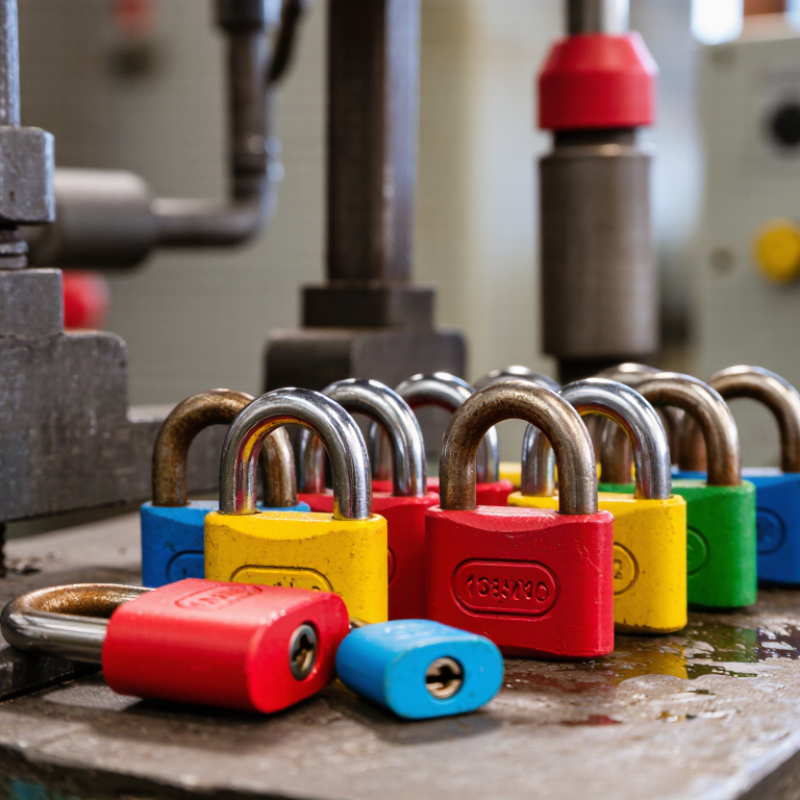
Lockout padlocks help isolate hazardous equipment during maintenance and cleaning. Their design must support clear identification, dependable closure, and repeated daily use.

A bright red, blue, or yellow body improves visibility near crowded control panels. A printed name label helps workers recognize the person responsible for the lock.

Material selection matters. Non-conductive nylon shackles can reduce electrical contact risks in suitable applications.

Hardened steel shackles provide stronger resistance against cutting and physical damage.

The shackle diameter should match the hasp or isolation device without forcing it. Compact bodies also fit narrow spaces around valves and switches.

Small details matter.

A key-retaining cylinder prevents the key from leaving while the padlock remains open. Differently keyed options reduce the chance of accidental key sharing. Weather-resistant materials help protect locks used in humid workshops or outdoor areas.

However, no padlock can replace a tested lockout procedure. That point is often underestimated.

In real maintenance work, dust can hide labels, and rushed workers may skip inspection.

Suppliers should check key operation, shackle movement, label adhesion, and body damage before shipment.

Buyers should request consistent dimensions, clear specifications, and traceable quality records.

Sample testing is wise before large wholesale orders, especially when workers wear gloves or work under poor lighting.

How to Choose a Reliable China Wholesale Supplier

Choosing a reliable China wholesale supplier for safety lockout padlocks requires evidence, not attractive photographs. The ILO reported nearly three million work-related deaths and 395 million non-fatal injuries worldwide each year. The U.S. Bureau of Labor Statistics recorded 5,283 fatal workplace injuries in 2023. These figures show why lockout equipment deserves careful purchasing.

Ask for material specifications, shackle diameter, corrosion-test results, and key-control procedures. A dependable supplier should provide batch numbers, inspection records, and clear production tolerances. Request samples before placing a large order. Check whether the body remains readable after oil, dust, and repeated handling. Small details matter. A faded label can delay maintenance work.

Factory verification also matters. Review production capacity, quality staff, export experience, and response time for defective goods. Independent audits can confirm whether documented procedures match the workshop floor. Clarify packaging, lead times, replacement terms, and inspection responsibilities in writing. A low quotation may reflect efficiency, but it may also hide thinner metal or inconsistent testing. That possibility deserves honest reflection. Reports from the supplier should be traceable, current, and specific, rather than filled with broad safety claims.

China Top Safety Lockout Padlocks Wholesale Supplier – How to Choose a Reliable China Wholesale Supplier

Evaluation Dimension What to Check Evidence to Request Practical Selection Benchmark
Product suitability Confirm the padlock is intended for lockout/tagout use and is suitable for the workplace hazards and procedures. Product datasheet, user instructions, available body and shackle options, and sample units. Specifications clearly state dimensions, materials, operating conditions, and intended application.
Lockout program compatibility Check that the proposed locks can be used within the buyer’s site-specific energy-control procedures, identification system, and key-control rules. Keying options, labeling or engraving options, and written details on how keys are assigned and controlled. The supplier can explain available keying configurations and provide samples for compatibility checks before bulk production.
Construction and materials Review body and shackle materials, corrosion resistance, and the suitability of the construction for the intended environment. Material specifications, dimensional drawings, sample inspection, and any applicable test reports. Material and finish details are documented, consistent across samples, and appropriate for the stated use conditions.
Durability and operation Assess key operation, shackle movement, body finish, and resistance to wear under normal handling. Written inspection or test methods, sample testing results, and a clear defect-handling process. Samples operate smoothly, and the supplier defines inspection criteria and corrective actions for nonconforming units.
Safety and regulatory claims Verify any stated compliance or performance claims against the exact product model and the relevant market requirements. Applicable declarations, test reports, and the name and scope of the issuing laboratory or assessment body, where relevant. Claims are specific and supported by traceable documents; avoid relying on unsupported statements such as “fully certified.”
Quality management Understand how incoming materials, production, final inspection, and product traceability are controlled. Quality procedures, inspection records, batch or lot identification method, and any current quality-system certificates claimed. The supplier can describe documented inspection stages and trace a finished batch to relevant production records.
Sample and pre-production approval Confirm samples represent the proposed materials, dimensions, keying, colors, and packaging for the order. Approved reference sample, signed specification sheet, and written change-approval process. Bulk production begins only after key product details and the reference sample are approved in writing.
Order terms and capacity Clarify minimum order quantity, production lead time, payment terms, customization limits, and peak-season capacity. Written quotation, order confirmation, production schedule, and stated assumptions for customized orders. All commercial terms are itemized and consistent between the quotation, purchase order, and final invoice.
Packaging and shipping Check protective packaging, carton details, shipping marks, and whether export documentation can meet the destination market’s needs. Packaging specification, carton dimensions and gross weight, packing list, and agreed shipping terms. Packaging protects the locks in transit, and shipping responsibilities and documents are agreed before dispatch.
Communication and after-sales support Evaluate response clarity, technical support, complaint handling, replacement terms, and availability of spare keys or parts where applicable. Named sales and quality contacts, written warranty terms, and a documented process for reporting product issues. The supplier responds with clear, consistent information and provides a defined route for resolving quality concerns.

Note: Use these benchmarks as a supplier-screening checklist. Confirm product suitability and applicable requirements for your workplace and destination market before ordering.

Manufacturing Standards and Quality Inspection

China Top Safety Lockout Padlocks Wholesale Supplier

Manufacturing quality begins with a controlled design, not attractive packaging. A reliable supplier should document steel grade, shackle hardness, key tolerance, and body dimensions.

The U.S. Bureau of Labor Statistics reported 2.6 million nonfatal workplace injuries and illnesses in private industry during 2023. That figure shows why dependable energy-isolation hardware deserves careful evaluation.

Inspection should follow written sampling plans and traceable batch records. Each padlock needs checks for shackle pull strength, locking function, corrosion resistance, key interchange, and label durability.

Inspectors should test samples after temperature and humidity exposure. ANSI/ASSP Z244.1 emphasizes effective control of hazardous energy through suitable procedures, devices, and employee training. A padlock supports that system; it cannot replace it.

The OSHA Control of Hazardous Energy standard also requires durable, standardized, and identifiable lockout devices. Wholesale buyers should request inspection reports, material certificates, calibration records, and corrective-action evidence.

Small details matter. A rough shackle can delay removal. A loose key cylinder can create confusion during maintenance.

No inspection system is perfect. Suppliers should record failed samples honestly, investigate root causes, and adjust production settings.

Visual inspection alone is insufficient. Independent pre-shipment checks can expose weak plating, incorrect engraving, or mixed key codes before delivery.

Ordering, Customization, and Export Considerations

China Top Safety Lockout Padlocks Wholesale Supplier

Ordering safety lockout padlocks works best when buyers share clear operating requirements. Specify the shackle material, diameter, usable height, body color, and keying arrangement. A maintenance team locking narrow electrical cabinets may need shorter shackles than crews securing large valve handles. Send photos or measurements when possible. Small details matter.

Before confirming a wholesale order, request a sample and check its fit, finish, and key operation. Agree on quantities, production lead time, inspection criteria, and packaging in writing. Custom options can include engraved identification, color coding, or private-label packaging, subject to the supplier’s capabilities. Keep the artwork simple and legible. One lesson from procurement: a custom mark can look clear on a screen but become crowded on a small lock body.

Export planning deserves the same care as product selection. Confirm carton dimensions, gross weight, shipping terms, and the documents required for the destination market. Ask the supplier to provide a commercial invoice and packing list, then have a qualified customs professional verify product descriptions and classification. Requirements can differ by destination. Leave time for sample approval and document checks; rushing either step can create avoidable delays. Clear communication helps, though it does not prevent every surprise.