Skip to content

How to Buy ADSS Fibra Optica for Global Projects?

Buying Adss Fibra Optica for global projects requires more than comparing prices per kilometer. The cable must match route conditions, network architecture, and national approval requirements. ITU’s Facts and Figures 2024 estimates that 5.5 billion people use the Internet worldwide. This growing demand increases pressure on operators to build reliable fiber infrastructure, including in remote and weather-exposed regions. FTTH Council Global Alliance reports also show continued fiber expansion across major markets, but deployment conditions differ sharply between countries.

A practical purchasing process starts with the route survey. Record pole spacing, maximum span, wind speed, ice loading, temperature range, and ultraviolet exposure. Then confirm the required fiber type, tensile strength, cable diameter, and permitted sag. IEC 60794 cable standards and ITU-T G.652.D or G.657 recommendations can support technical evaluation. However, compliance alone does not guarantee field performance. Supplier experience matters.

Ask for factory test reports, attenuation results, tensile testing, aging data, and traceable production records. Request samples before approving a full shipment. A real sample can reveal stiffness, sheath quality, marking clarity, and handling problems. Small details matter.

The lowest quotation may hide higher installation costs, longer lead times, or weak after-sales support. I would not pretend every supplier comparison is perfectly objective. Exchange rates, customs delays, and incomplete route data can distort the decision. A stronger approach combines verified standards, local engineering review, and documented supplier references. For global projects, choose a partner that can provide consistent specifications, packaging, technical documentation, and replacement support across multiple regions. That is often more valuable than a small initial discount.
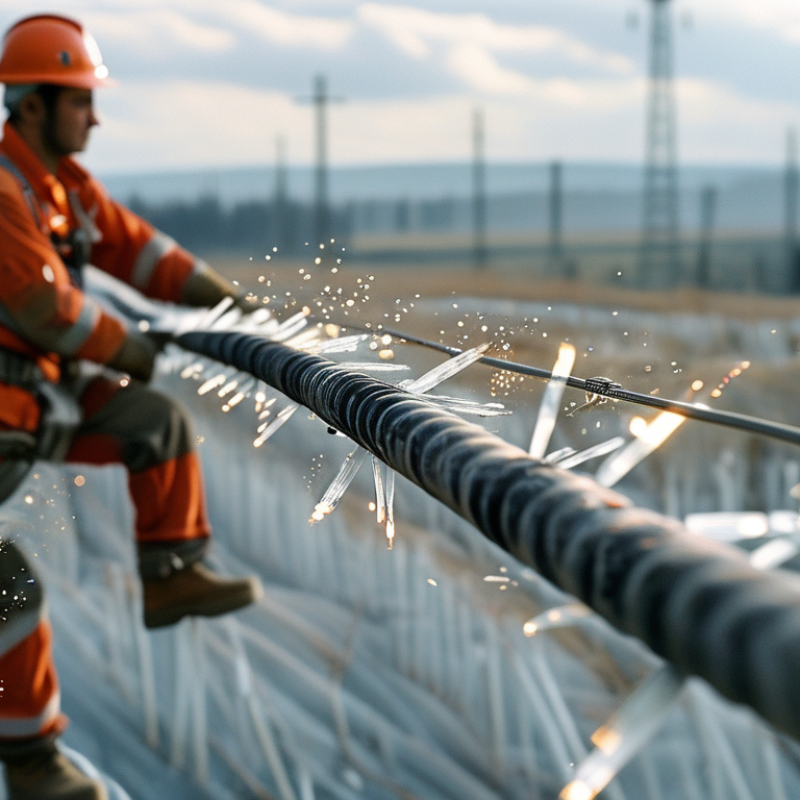
How to Buy ADSS Fibra Optica for Global Projects?

Define Route, Span, Fiber Count, and G.652.D Loss ≤0.22 dB/km

How to Buy ADSS Fibra Optica for Global Projects?

Define Route, Span, Fiber Count, and G.652.D Loss ≤0.22 dB/km

Begin with the route, not the cable catalogue. Map pole locations, road crossings, river sections, and maintenance access. Record the longest span between supports. A 180-meter span needs different mechanical performance than a 60-meter span. Check wind, ice, temperature changes, and local installation rules. A route survey is essential.

Select fiber count from real network demand and future expansion. Twelve fibers may serve a small link, while 48 or 96 fibers can support regional growth. Avoid choosing only by today’s traffic. Empty fibers provide useful capacity, but excessive count can increase cable weight and installation tension. This is where planning becomes imperfect.

Specify G.652.D fiber with attenuation no higher than 0.22 dB/km at 1550 nm. Request factory test records for every cable length. Also confirm attenuation at 1310 nm, chromatic dispersion, tensile strength, and cable diameter. Calculate the optical budget using cable length, splices, connectors, and repair allowance. A spreadsheet can still lie when field conditions are missing. Test installed sections with OTDR and insertion-loss equipment. Inspectors should compare results with the approved route design, not just the delivery documents. Local climate data and actual pole loading deserve equal attention.

Match ADSS Span Ratings to 10–40 kN Loads and Local Weather Limits

How to Buy ADSS Fiber Optic for Global Projects?

ADSS selection starts with span loading, not fiber count. A 10–40 kN rating describes tensile capacity, not the permitted everyday load. Engineers should calculate wind, ice, cable weight, sag, and installation tension for each route.

IEEE 1222-2019 and IEC 60794-1-2 provide useful testing and design references. A 10 kN cable may suit a short, sheltered span, while a 40 kN design may fit long crossings or severe ice zones. Yet higher strength often increases diameter and weight.

Local weather changes the answer. ASCE 7-22 wind and ice maps can establish regional design pressures in the United States, while national standards apply elsewhere. The World Meteorological Organization reported 2023 as about 1.45°C above the 1850–1900 average. That global figure does not replace a local weather record. It does signal changing assumptions.

Check the lowest temperature, peak gust, ice thickness, altitude, and pollution exposure near every pole line.

Ask suppliers for verified breaking load, elastic modulus, creep data, diameter, weight, and temperature limits. Request calculations for the exact span, not a generic table. For example, a 300-meter mountain span with 20 mm radial ice can exceed expectations quickly.

I have seen projects over-select strength but under-check sag clearance. That mistake remains expensive. Keep a design margin, confirm fittings match the cable, and validate the final loading model with an independent engineer.

Specify 24–288 Fibers, 1310/1550 nm Performance, and IEC 60794 Tests

How to Buy ADSS Fiber Optic for Global Projects?

Choosing ADSS fiber optic cable starts with the project’s real capacity needs. Specify 24, 48, 96, 144, or up to 288 fibers. Leave space for network expansion, but avoid paying for unused capacity. Check the installation span, wind exposure, ice loading, and pole distance. These details affect cable diameter, weight, and tensile strength. Experienced buyers also request fiber performance at 1310 nm and 1550 nm. Review attenuation, dispersion, and uniformity across every fiber. A low optical loss result is useful, but it does not replace mechanical verification.

Tips: Request a complete IEC 60794 test record before approval. Review tensile, crush, impact, bending, water penetration, and temperature cycling results. Confirm the test sample matches the proposed cable design. This point is often missed. Ask for factory traceability, inspection dates, and acceptance criteria. Independent verification can add confidence for large international projects. However, paperwork alone cannot reveal every field risk. I once saw a technically compliant cable struggle during installation because the pulling tension was underestimated. The specification was sound, but the planning was not.

For global deployment, confirm compatible drum lengths, delivery protection, connector requirements, and local installation practices. Discuss 1310/1550 nm testing with the network engineer and installer together. Their priorities may differ. A practical purchase decision balances fiber count, optical performance, mechanical safety, and verified IEC 60794 testing. Keep the final specification measurable and easy to audit.

How to Buy ADSS Fibra Optica for Global Projects? - Specify 24–288 Fibers, 1310/1550 nm Performance, and IEC 60794 Tests

Reference Configuration Fiber Count Typical Cable Structure Approx. Cable Diameter Approx. Cable Mass Reference Rated Tensile Strength Recommended Maximum Span
Compact access/distribution 24 fibers 4 × 6-fiber loose tubes, central strength member, aramid yarn, PE outer sheath Approx. 10–12 mm Approx. 85–120 kg/km Approx. 8–12 kN Up to approximately 100–150 m, subject to sag and wind calculations
Medium-capacity access 48 fibers 6 × 8-fiber loose tubes or equivalent stranded design with aramid reinforcement Approx. 11–14 mm Approx. 105–145 kg/km Approx. 10–16 kN Up to approximately 150–200 m, subject to route conditions
Distribution network 96 fibers 12 × 8-fiber loose tubes or equivalent, non-metallic central strength member and aramid yarn Approx. 13–17 mm Approx. 135–190 kg/km Approx. 12–20 kN Up to approximately 200–250 m, subject to engineering verification
High-capacity backbone 144 fibers 18 × 8-fiber loose tubes or equivalent stranded design with high-strength dielectric reinforcement Approx. 15–20 mm Approx. 175–245 kg/km Approx. 16–25 kN Typically engineered for approximately 200–300 m spans
Large-capacity backbone 288 fibers 36 × 8-fiber loose tubes or equivalent high-density stranded construction Approx. 19–25 mm Approx. 240–340 kg/km Approx. 20–35 kN Typically engineered for approximately 250–350 m spans

Optical Performance and Construction Requirements

Specification Dimension Recommended Requirement Procurement Verification
Fiber type Single-mode fiber compliant with ITU-T G.652.D; bend-insensitive G.657.A1 or G.657.A2 may be specified where tighter routing is required Review the fiber datasheet, attenuation trace, geometry data and compliance declaration
Operating wavelengths 1310 nm and 1550 nm transmission windows; optional 1625 nm qualification for maintenance or extended monitoring Confirm test wavelengths and whether attenuation is specified per fiber or by sample
Maximum attenuation Typically no more than 0.35 dB/km at 1310 nm and 0.22 dB/km at 1550 nm at 20°C, unless a stricter project limit is agreed OTDR and insertion-loss measurements with results supplied by reel and fiber identification
Chromatic dispersion G.652.D-compatible dispersion characteristics for standard 1310/1550 nm network applications Request a fiber compliance report and dispersion data covering the intended transmission band
Water blocking Dry water-blocking materials or water-blocking gel, with sealed cable ends and protected tube assemblies Verify water penetration performance and compatibility with the installation temperature range
Outer sheath UV-resistant black polyethylene; LSZH or other sheath materials may be required by local fire and environmental regulations Check sheath marking, UV resistance, flame requirements, minimum installation temperature and jacket thickness
Temperature range Typical design target: approximately −40°C to +70°C for operation; installation limits must be stated separately Request temperature-cycle test data and the declared installation, storage and operating ranges

IEC 60794 Test Schedule

Test Category Relevant IEC 60794 Method Typical Project Acceptance Criteria Required Evidence
Tensile performance IEC 60794-1-2, Method E1 No fiber breakage; no permanent fiber strain; attenuation change within the contract limit during and after loading Test load, cable length, fiber attenuation before/after test and residual strain results
Crush resistance IEC 60794-1-2, Method E3 No sheath cracking or fiber damage; attenuation recovery and permanent change within the agreed limit Applied load, dwell time, sample condition and optical measurement records
Impact resistance IEC 60794-1-2, Method E4 No visible sheath failure or fiber breakage; attenuation remains within the project limit Impact energy, number of impacts, spacing and post-test inspection
Repeated bending IEC 60794-1-2, Method E6 No fiber breakage, sheath damage or unacceptable attenuation increase after repeated bending cycles Mandrel diameter, bending cycles, tension and optical results
Torsion IEC 60794-1-2, Method E7 No jacket splitting, structural displacement or fiber damage; optical performance remains compliant Twist angle, cycles, sample length and before/after attenuation records
Water penetration IEC 60794-1-2, Method E11 No water leakage beyond the specified test length during the required test period Water head, test duration, cable orientation and leakage observation
Temperature cycling IEC 60794-1-2 environmental test methods, as specified in the purchase standard Attenuation variation remains within the agreed limit across the declared temperature range; no sheath or tube damage Temperature profile, dwell times, number of cycles and continuous optical monitoring data

Note: Cable diameter, mass, rated tensile strength and maximum span are reference engineering ranges. Final values must be confirmed against the selected ADSS design, pole loading, wind and ice conditions, sag-tension calculations, installation hardware and the applicable national requirements.

Verify ISO 9001 Supply, IEC 60794 Qualification, and Factory Acceptance Data

How to Buy ADSS Fiber Optic for Global Projects?

Global connectivity is expanding quickly. The ITU Facts and Figures 2023 report estimated 5.4 billion people were online. This growth increases pressure on aerial fiber networks, especially across long rural spans. For ADSS procurement, verify evidence before comparing prices.

ISO 9001 supply control is a useful starting point. The ISO Survey 2022 recorded 1,265,216 ISO 9001 certificates worldwide. However, a certificate alone does not prove consistent fiber quality. Request its scope, validity, issuing body, and production-site address. Then review traceability from raw materials to finished reels. Small details matter.

Use IEC 60794 test requirements to examine mechanical and environmental performance. Ask for attenuation results at 1310 and 1550 nanometers, tensile tests, temperature cycling, and water penetration data. Factory acceptance records should include cable length, drum number, OTDR traces, test equipment calibration, and acceptance limits. Keep them project-specific. A generic report is weak evidence.

For global routes, request span calculations covering wind, ice, temperature, sag, and pole loading. Check whether the design matches local installation conditions. I have seen paperwork look complete while missing the actual cable batch. That is an uncomfortable gap. Allow witness testing when risk is high, and record nonconformities openly. Perfect documentation is rare; unexplained results are worse.

Compare Total Cost: Cable, Hardware, Logistics, Duties, and 25-Year O&M

Buying ADSS fiber for a global project requires a 25-year cost model, not a cable-only quote. OECD broadband statistics show fiber exceeded 40% of fixed broadband subscriptions in 2023. Demand is expanding, but procurement mistakes remain expensive. Price the cable, fittings, suspension clamps, dead ends, splice closures, testing, and installation tools together. A cheaper cable can require stronger hardware or more frequent repairs.

Logistics can change the decision quickly. UNCTAD’s Review of Maritime Transport 2023 states that ships carry over 80% of global merchandise trade by volume. Add inland delivery, insurance, port handling, storage, and weather-related delays. The World Bank Logistics Performance Index 2023 evaluates customs, infrastructure, shipment reliability, and timeliness. Use those risks when comparing routes. Duties also need careful classification, origin documents, and local tax treatment. A 25-year O&M forecast should include inspection vehicles, emergency labor, spare closures, testing equipment, and inflation. My imperfect assumption: many models underprice storm damage and technician travel.

Tips: Request a landed-cost worksheet from each supplier. Show cable weight, drum dimensions, delivery terms, duty assumptions, and warranty limits. Test a low, normal, and high freight scenario. Reserve spare cable and hardware near remote sections. ITU Facts and Figures 2023 reported 5.4 billion people online, proving connectivity demand is broad, but remote access still creates costly maintenance gaps. Keep those gaps visible.

How to Buy ADSS Fiber Optic for Global Projects?

Total-cost comparison by destination: cable, hardware, logistics, duties, and 25-year operation & maintenance

Planning benchmark for a 48-fiber ADSS deployment of approximately 100 km. Values are representative USD per installed kilometer; logistics and duties vary by route, customs classification, local labor rates, terrain, and maintenance requirements. The lowest purchase price does not always produce the lowest 25-year total cost.