10 Ways to Boost Business Efficiency Through Automation Strategies
In today's rapidly evolving business landscape, efficiency is paramount for sustained growth and competitiveness. According to a recent report by McKinsey, organizations that implement automation strategies can enhance their productivity by up to 40%. This seismic shift not only streamlines operations but also allows businesses to allocate resources more effectively, paving the way for innovation and improved customer experiences. As industries increasingly recognize the value of technology-driven efficiencies, automation stands out as a critical avenue for those seeking to elevate their operational effectiveness.
Expert insights also underscore the significance of integrating automation into business processes. Dr. Emily Chen, a leading researcher in the field of operational technology, notes that “through automation, businesses can not only reduce human error but also expedite decision-making processes.” This transformation empowers employees to focus on strategic initiatives rather than mundane tasks, ultimately fostering a more engaged and agile workforce. As companies strategize for the future, understanding and leveraging automation will be crucial for driving meaningful results and outpacing competitors in an ever-demanding marketplace.

Understanding Automation and Its Impact on Business Efficiency
Automation has emerged as a transformative force in the business landscape, fundamentally altering the way organizations operate and enhancing overall efficiency. By automating repetitive and time-consuming tasks, businesses can redirect their resources and focus on strategic initiatives that drive growth. For instance, automating financial processes such as invoicing and payroll not only minimizes human error but also accelerates transaction speeds, allowing companies to better manage cash flow and allocate funds effectively. This shift from manual processes to automated systems frees up employee time, enabling teams to concentrate on high-value activities that require critical thinking and creativity.
Moreover, the impact of automation extends beyond mere efficiency; it also fosters a culture of innovation within organizations. When employees are unburdened from mundane tasks, they are more likely to engage in problem-solving and contribute to new ideas and solutions. This heightened focus on innovation can lead to improved products and services, ultimately enhancing customer satisfaction and loyalty. Furthermore, automation provides businesses with valuable data analytics, allowing for more informed decision-making and the ability to quickly adapt to market changes. In this way, understanding and implementing automation strategies not only boosts efficiency but also positions businesses for long-term success in an increasingly competitive environment.
10 Ways to Boost Business Efficiency Through Automation Strategies
| Automation Strategy |
Description |
Impact on Efficiency |
Estimated Time Savings (%) |
| Email Automation |
Automating email responses and marketing campaigns. |
Improves response times and reduces manual workload. |
40% |
| CRM Systems |
Using automated customer relationship management tools. |
Enhances customer engagement and data management. |
30% |
| Task Management Tools |
Automating task assignment and tracking progress. |
Improves team collaboration and accountability. |
25% |
| Inventory Management |
Automating stock monitoring and reordering processes. |
Reduces stock shortages and overstock situations. |
35% |
| Finance Automation |
Automating invoicing and expense management. |
Speeds up cash flow and financial reporting. |
50% |
| HR Payroll Systems |
Automating payroll and employee benefits management. |
Reduces errors and administrative overhead. |
30% |
| Reporting Tools |
Automating data collection and report generation. |
Enhances decision-making and strategic planning. |
40% |
| Chatbots |
Implementing chatbots for customer service inquiries. |
Reduces human resource demand and improves service availability. |
45% |
| Project Management Automation |
Streamlining project workflows and timelines. |
Enhances project delivery and team coordination. |
35% |
Identifying Key Areas for Automation in Your Business Process
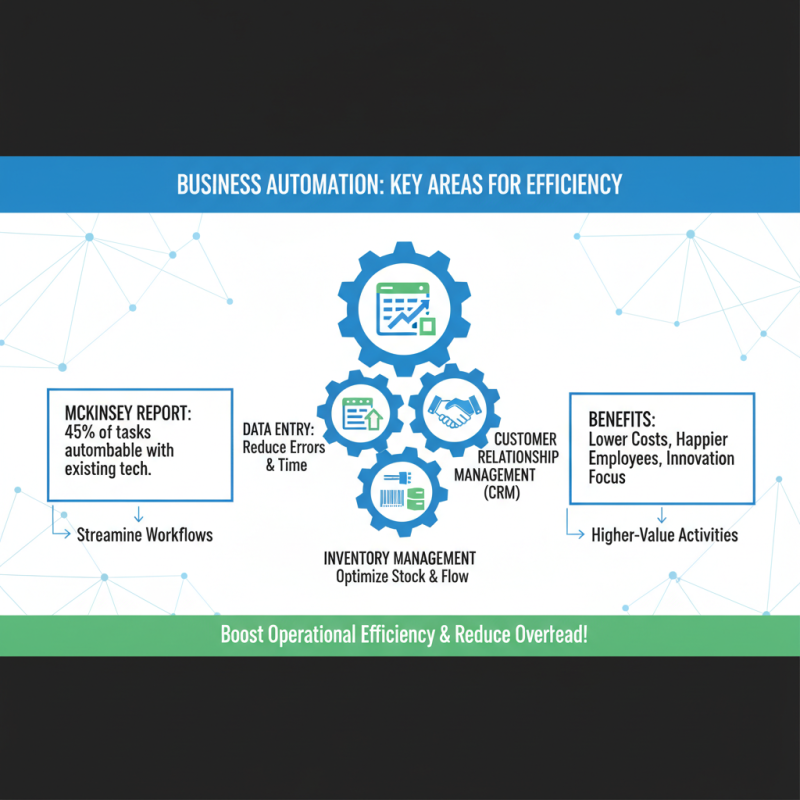
Identifying key areas for automation within your business process is crucial for enhancing operational efficiency and reducing overhead costs. A report by McKinsey & Company highlights that as much as 45% of tasks currently done by humans could be automated using existing technology. This potential is particularly relevant in areas such as data entry, inventory management, and customer relationship management, where repetitive tasks consume significant resources. By automating these functions, businesses can streamline workflows, enabling employees to focus on higher-value activities that drive innovation and growth.
Moreover, a study from the Harvard Business Review indicated that companies implementing automation strategies see productivity gains of up to 30%. For instance, in finance, automating invoicing and payment processing not only mitigates human error but also accelerates cash flow management. In manufacturing, automation technologies can optimize supply chain operations and enhance inventory accuracy. Identifying these key areas not only boosts efficiency but also offers a competitive advantage in a rapidly evolving market. By leveraging data analytics, businesses can pinpoint inefficiencies and prioritize automation efforts that yield the highest returns, ensuring strategic alignment with broader organizational goals.
Implementing Workflow Automation Tools for Streamlined Operations
In today’s fast-paced business environment, implementing workflow automation tools can significantly enhance operational efficiency. These tools help streamline processes by minimizing manual tasks and reducing the likelihood of human error. By leveraging automation, businesses can allocate more time to core activities that drive growth and innovation.
Tips: Start by mapping out existing workflows to identify bottlenecks and repetitive tasks. Once you have a clear picture, select automation tools that can effectively address these pain points. Focus on automating time-consuming tasks such as data entry, reporting, and customer management to free up valuable resources.
Additionally, it’s crucial to provide training for your team on any new automation tools. Continuous support and education will ensure that employees feel comfortable using these technologies, maximizing their potential benefits. Encourage feedback and adjust processes as needed to optimize workflow further. By creating a culture of adaptation and efficiency, your business will not only see productivity gains but also a more engaged workforce.
10 Ways to Boost Business Efficiency Through Automation Strategies
Measuring the Impact of Automation on Business Performance Metrics
Automation has become a game changer for businesses looking to enhance efficiency and improve performance metrics. According to a report by McKinsey, organizations that implement automation can increase productivity by up to 40%. This substantial boost not only reduces the time spent on repetitive tasks but also allows employees to focus on higher-value activities. By streamlining processes through automation, companies can achieve more accurate and consistent results, which directly impacts their overall performance metrics like revenue growth and operational efficiency.
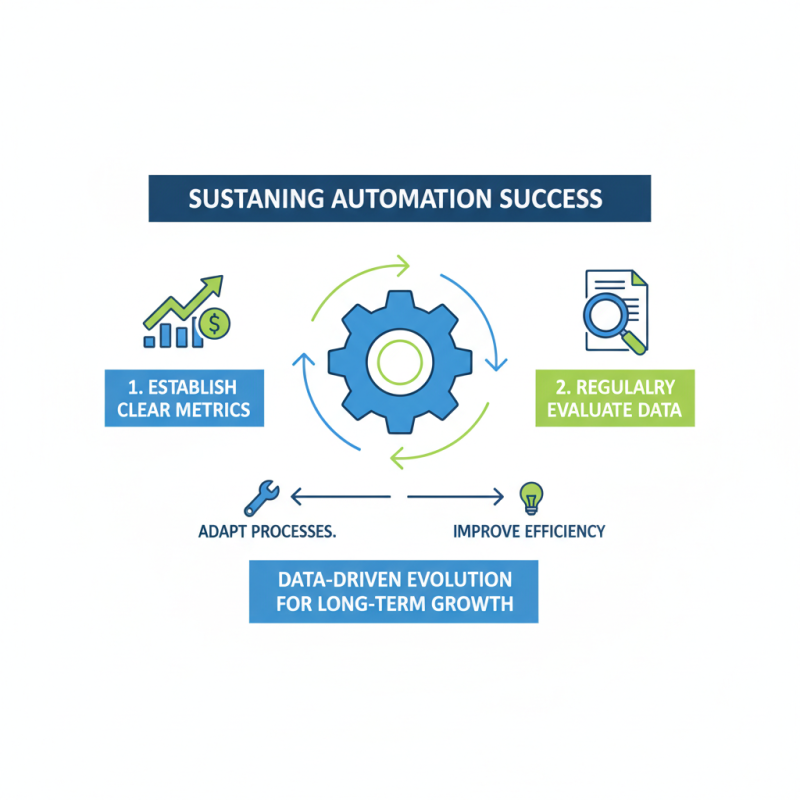
Furthermore, measuring the impact of automation involves analyzing key performance indicators (KPIs) such as cycle time, cost savings, and error rates. For instance, a study by Forrester found that companies that adopted automation reported a 30% reduction in operational costs within the first year. By tracking these metrics, businesses can identify areas of improvement and adjust their strategies accordingly. A focus on data-driven decision making ensures that the benefits of automation are maximized, leading to enhanced business performance and strategic growth. As such, investing in automation technologies should be a priority for businesses seeking measurable improvements in their operational metrics.