Choosing an Air Breaker for global use is not a simple brand exercise. It is a safety and reliability decision. Buyers must examine interrupting capacity, rated current, trip characteristics, pole configuration, insulation performance, and service support. A breaker that performs well in a clean factory may struggle in a humid coastal plant. Dust, heat, vibration, and unstable maintenance practices can expose weak designs quickly.
Mike Holt, a widely recognized electrical training expert, often reminds installers, “Electricity is unforgiving.” That warning belongs at the center of every purchasing decision. A respected Air Breaker brand should provide clear technical data, verified testing, consistent production, and instructions that electricians can actually follow. IEC or UL compliance matters, but certification alone does not guarantee a suitable product. Application conditions still matter.
This guide reviews ten Air Breaker brands for international buyers. It considers product quality, global availability, protection technology, customization, warranty support, and long-term operating value. Some brands lead in advanced electronic trip units. Others remain attractive because of simple maintenance and strong regional distribution. The “best” choice may change between a data center, a manufacturing line, and a commercial building.
There is no perfect shortlist.
Pricing can hide lifecycle costs. A low purchase price may become expensive after repeated nuisance trips, delayed parts, or difficult servicing. Buyers should compare realistic project needs, not impressive brochures. The following selection aims to be practical, but it should not replace a qualified engineer’s review of the installation.
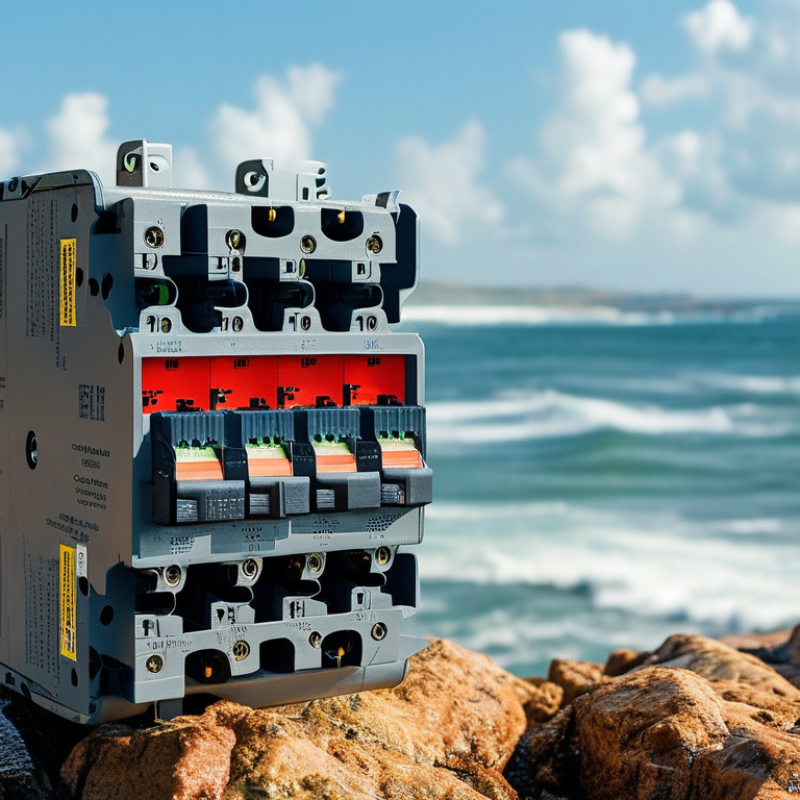
Air breakers use air to extinguish the arc when contacts separate. Their practical value appears in factories, data centers, and large commercial panels. IEC 60947-2 covers circuit-breakers for low-voltage systems up to 1,000 V AC or 1,500 V DC. This boundary matters. A device above these levels needs a different technical review.
The standard addresses rated voltage, current, short-circuit performance, temperature rise, insulation, and operating endurance. Buyers should compare the rated ultimate short-circuit breaking capacity with the fault level at the installation point. A larger frame does not automatically provide safer interruption. Trip-unit settings also require careful coordination with cables, transformers, and downstream devices.
Look at the details.
In practical panel inspections, unclear labels often create avoidable mistakes. Verify the pole arrangement, frequency, neutral protection, control voltage, and installation altitude. Check whether the breaker supports selective coordination and zone protection when the system requires them. For DC applications, polarity and arc behavior deserve extra attention. AC specifications cannot simply be transferred to DC networks.
IEC 60947-2 compliance supports technical confidence, but it is not the entire purchasing decision. Request test reports, declaration documents, routine-test information, and local certification requirements. Some projects also require different enclosure ratings or environmental testing. Product data can look complete while omitting derating values. That omission deserves questions, not assumptions. A qualified engineer should confirm the final selection against the actual network design.
The IEA Electricity 2024 report forecasts global electricity demand to grow by about 3.2% annually from 2024 to 2026. That growth increases the need for dependable low-voltage air circuit breakers. For global buyers, brand ranking should begin with verified performance, not advertising claims.
IEC 60947-2 defines Icu as ultimate short-circuit breaking capacity. It shows whether a breaker can interrupt a severe fault safely. Ics measures service breaking capacity after testing, so it better reflects repeatable field operation. I rank Ics above headline Icu when both values are credible. A breaker with 100 kA Icu and 75 kA Ics may offer stronger practical resilience than one listing 120 kA Icu but weak service data.
Rated current also needs careful reading. A 6,300 A breaker can support major industrial feeders, but that figure may depend on ambient temperature, enclosure design, and ventilation. Continuous current is not automatically equal to frame capacity. I check derating charts, temperature-rise reports, short-circuit test certificates, and coordination studies. The best-ranked manufacturer provides clear, traceable evidence for every value. A neat catalogue can still hide gaps. I would lower a ranking when test conditions are unclear, even if the numbers look impressive.
Selecting the ten best air breaker manufacturers requires more than comparing catalog prices. In industrial projects, engineers examine breaking capacity, frame size, trip accuracy, and service access. A dependable air circuit breaker should protect large motors, transformers, and distribution panels under demanding loads. Common evaluation points include IEC 60947-2 compliance, thermal-magnetic or electronic trip units, and short-circuit ratings reaching 65 kA or higher.
Field experience shows that practical details often decide performance. A 400 V factory panel may need a 1600 A breaker with adjustable long-time and short-time protection. A larger facility may require 3200 A or 6300 A equipment, drawout construction, and remote operation. Strong manufacturers provide clear wiring diagrams, tested accessories, spare parts, and technical support across regions. Their documentation should explain installation torque, insulation clearance, maintenance intervals, and replacement procedures without confusing language.
No ranking is completely objective. Project voltage, climate, enclosure design, and local technicians can change the best choice. I would also question very low prices, even when the specifications look attractive. Some products perform well in controlled tests but become difficult to maintain after several years. Buyers should request test certificates, warranty terms, factory inspection records, and evidence of service capability in the destination market. The best supplier is not always the most famous one. It is the one that matches protection needs with dependable long-term support.
10 Best Air Breaker Brands for Global Buyers?
Global buyers should rank compliance before price or catalog breadth. The International Energy Agency reported that global electricity demand may grow by 3.4% annually from 2024 to 2026. More energized equipment means greater pressure on reliable low-voltage protection.
IEC 60947-2 verifies key circuit-breaker performance, including short-circuit capacity, temperature rise, and operating endurance. IEC 61439 applies to the complete low-voltage switchboard, not only its internal breaker. This distinction matters. A compliant breaker does not automatically make a compliant assembly. UL 489 is essential for markets requiring North American certification, especially molded-case and enclosed circuit breakers. Buyers should request current test reports, certification numbers, trip-unit data, and production traceability. Source: IEA, Electricity 2024; IEC 60947-2; IEC 61439; UL 489.
Regional approval can change the buying decision. CE marking may support European market access, but it is not a universal substitute for national requirements. Projects in China, Korea, Canada, or Gulf markets may require additional local documentation, certification, or authority acceptance. Check the exact installation country, voltage system, frequency, interrupting rating, and enclosure configuration. A useful audit compares the certificate, nameplate, wiring diagram, and final assembly record.
Paperwork can still miss a mismatch. I would also verify samples under realistic ambient temperatures and cable sizes, because laboratory conditions rarely mirror crowded switchrooms. The strongest suppliers explain these limits clearly, even when the answer delays a purchase. That restraint is a practical sign of reliability.
Maximum voltage scope explicitly stated in commonly referenced low-voltage circuit-breaker and assembly standards. Values are shown in volts and are not product-specific ratings.
IEC 60947-2 and IEC 61439 cover equipment and assemblies up to 1,000 V AC or 1,500 V DC. UL 489 and CSA C22.2 No. 5.1 generally address circuit breakers and related equipment rated up to 600 V. Final market access also depends on the applicable edition, testing, marking, certification, and regional approval requirements.
For global buyers, an air breaker should be judged beyond its purchase price. Breaking capacity is the first technical checkpoint. Compare the rated ultimate short-circuit capacity, Icu, with the service short-circuit capacity, Ics. Ics matters during repeated faults. Use the installation’s calculated prospective fault current, not a rough estimate. A higher rating is not always better. It may increase cost and interrupting stress.
Trip units must match the system’s protection plan. Adjustable long-time, short-time, instantaneous, and ground-fault settings support better coordination. Confirm that settings protect cables, busbars, and connected equipment. Selectivity can reduce unnecessary shutdowns. Test the trip unit before energizing the panel. Factory curves help, but site verification is stronger. Small errors remain possible.
Service life depends on switching frequency, fault interruptions, dust, heat, and maintenance quality. Check mechanical and electrical endurance ratings separately. Inspect contact wear, arc chutes, terminals, and the withdrawable mechanism. Keep service records. Replacement parts and local technical support can matter more than a slightly longer laboratory rating. Total cost includes accessories, freight, commissioning, testing, training, downtime, and future spares. A low invoice can hide expensive integration work. A neat spreadsheet can still mislead. Review assumptions with the installer before approval.
| Reference Profile | Typical Rated Current (In) | Rated Operational Voltage (Ue) | Typical Service Breaking Capacity (Ics at 415 V AC) | Ultimate Breaking Capacity (Icu at 415 V AC) | Trip Unit Configuration | Protection Functions | Mechanical Life | Electrical Life | Communication & Metering | Installation Format | Relative Total Cost of Ownership | Typical Buyer Application |
|---|---|---|---|---|---|---|---|---|---|---|---|---|
| Profile 01 High-performance | 800–4,000 A | 690 V AC | 50–85 kA | 65–100 kA | Electronic LSIG; adjustable long-time, short-time, instantaneous and ground-fault protection | Overload, short-circuit, ground-fault, zone-selective interlocking | 20,000–25,000 operations | 8,000–12,000 operations | Modbus or Ethernet option; energy metering and event logs | Fixed or drawout | Medium–High | Large industrial plants, data centers and critical infrastructure |
| Profile 02 High-capacity | 1,000–6,300 A | 690 V AC | 65–100 kA | 85–120 kA | Advanced electronic trip unit with selectable protection curves | LSIG, neutral protection, thermal memory and maintenance alarms | 15,000–20,000 operations | 5,000–10,000 operations | Power quality, load monitoring and remote trip indication options | Drawout preferred | High | Utility substations, heavy manufacturing and high fault-level systems |
| Profile 03 General-purpose | 630–3,200 A | 415–690 V AC | 42–65 kA | 50–85 kA | Electronic LSI or LSIG | Overload, short-circuit and optional ground-fault protection | 15,000–20,000 operations | 5,000–8,000 operations | Communication module available on selected configurations | Fixed or drawout | Medium | Commercial buildings, factories and main distribution boards |
| Profile 04 Cost-balanced | 400–2,500 A | 415–690 V AC | 42–50 kA | 50–65 kA | Electronic LSI; basic display or rotary adjustment | Overload, short-circuit and optional earth-fault protection | 10,000–15,000 operations | 3,000–6,000 operations | Basic current and trip-status indication | Fixed or compact drawout | Low–Medium | Standard commercial and light-industrial distribution |
| Profile 05 Selective-coordination | 800–4,000 A | 690 V AC | 50–85 kA | 65–100 kA | Electronic LSIG with short-time delay and zone-selective interlocking | Adjustable overload, short-circuit, ground-fault and neutral protection | 15,000–25,000 operations | 5,000–10,000 operations | Trip history, maintenance counters and network gateway options | Drawout | Medium–High | Hospitals, airports and systems requiring continuity of service |
| Profile 06 Compact footprint | 630–2,000 A | 415–690 V AC | 42–65 kA | 50–85 kA | Electronic LSI with compact sensing module | Overload, short-circuit and optional ground-fault protection | 10,000–15,000 operations | 3,000–5,000 operations | Optional metering; limited communication functions | Fixed or compact drawout | Low–Medium | Space-constrained switchboards and retrofit projects |
| Profile 07 Digital monitoring | 800–5,000 A | 690 V AC | 50–85 kA | 65–100 kA | Microprocessor trip unit with configurable protection curves | LSIG, undervoltage, overvoltage, reverse power and load shedding options | 15,000–25,000 operations | 5,000–10,000 operations | Ethernet, Modbus, condition monitoring and high-resolution metering options | Drawout | High | Smart buildings, energy-management systems and automated plants |
| Profile 08 Motor-generator feeder | 800–3,200 A | 415–690 V AC | 50–65 kA | 65–85 kA | Electronic LSIG with generator and reverse-power functions | Overload, short-circuit, ground-fault, reverse power and underfrequency options | 15,000–20,000 operations | 5,000–8,000 operations | Generator-control and supervisory communication options | Fixed or drawout | Medium–High | Generator incomers, synchronizing panels and process plants |
| Profile 09 Retrofit-friendly | 630–3,200 A | 415–690 V AC | 42–65 kA | 50–85 kA | Electronic LSI or LSIG with interchangeable accessories | Overload, short-circuit and optional ground-fault protection | 10,000–20,000 operations | 3,000–8,000 operations | Basic metering; adapter kits may be required for legacy switchboards | Fixed or drawout; compatibility must be checked | Medium | Replacement projects where busbar and compartment changes are limited |
| Profile 10 Essential-duty | 400–1,600 A | 415–690 V AC | 36–50 kA | 42–65 kA | Electronic LSI; fixed settings on entry configurations | Overload and short-circuit protection; ground-fault option may be available | 10,000–15,000 operations | 3,000–5,000 operations | Local indication with limited communication capability | Fixed | Low | Small commercial buildings, basic industrial feeders and budget-led projects |