Skip to content

2026 Best Oil Separator Types for Global Buyers?

Choosing the best Oil Separator in 2026 requires more than comparing catalogue prices. Global buyers face different wastewater temperatures, oil densities, flow rates, and discharge standards. A separator working well in a food-processing plant may fail beside a busy vehicle workshop.

Industry data shows continuing demand for oil-water treatment equipment. Grand View Research identifies industrial wastewater growth as a major market driver. MarketsandMarkets also highlights stricter discharge requirements and rising environmental investment. However, market forecasts do not replace site testing. A neat spreadsheet can still mislead.

The U.S. Environmental Protection Agency recommends evaluating influent characteristics, hydraulic loading, maintenance needs, and final discharge conditions. API Publication 421 remains an important reference for gravity oil-water separator design. Coalescing plate separators, CPI units, hydrocyclones, and dissolved air flotation systems each solve different problems. None is universally “best.”

Wastewater engineering expert George Tchobanoglous offers a useful principle: “Treatment must match the wastewater and the objective.” That idea should guide every 2026 purchasing decision. Buyers need verified performance data, not only impressive removal percentages. Ask for testing conditions, droplet-size assumptions, retention time, and cleaning requirements.

Experience also reveals an uncomfortable detail. Many failures begin with poor upstream control. Excess solids, detergents, emulsified oils, and sudden flow surges can overwhelm expensive equipment. The right Oil Separator is therefore a complete treatment decision, not a standalone product choice. This guide compares the main separator types, their practical strengths, limitations, and suitability for global industrial applications.

2026 Best Oil Separator Types for Global Buyers?

What Is an Oil Separator and How Does It Work?

2026 Best Oil Separator Types for Global Buyers?

What Is an Oil Separator and How Does It Work?

An oil separator removes oil droplets, mist, and liquid contaminants from compressed air, gas, or wastewater. Its purpose is simple: protect equipment and reduce pollution risks. Inside the housing, contaminated fluid slows down or changes direction. Heavier oil particles fall into a collection chamber. Smaller droplets may join together on coalescing elements, forming larger drops that drain more easily. Centrifugal models spin the flow, while gravity-based units rely on calm settling. Each design suits different flow rates, temperatures, and oil loads.

Selection requires practical testing, not only catalogue figures. Check the medium, inlet pressure, operating temperature, and expected oil concentration. Drain capacity also matters. A small drain can cause oil to collect inside the separator, reducing performance. In workshops, technicians should inspect pressure drop and replace damaged filter elements. I have seen systems fail because maintenance schedules ignored sudden changes in air quality. No separator is perfect. Fine mist may still pass through, especially when the unit is overloaded or poorly sized.

Tips: Choose a separator with documented test data and accessible service parts. Leave space beneath the unit for safe draining and inspection. Ask for performance data at your actual flow rate, not a convenient laboratory condition. Recheck the specification when conditions change.

Major Oil Separator Types and Their Operating Principles

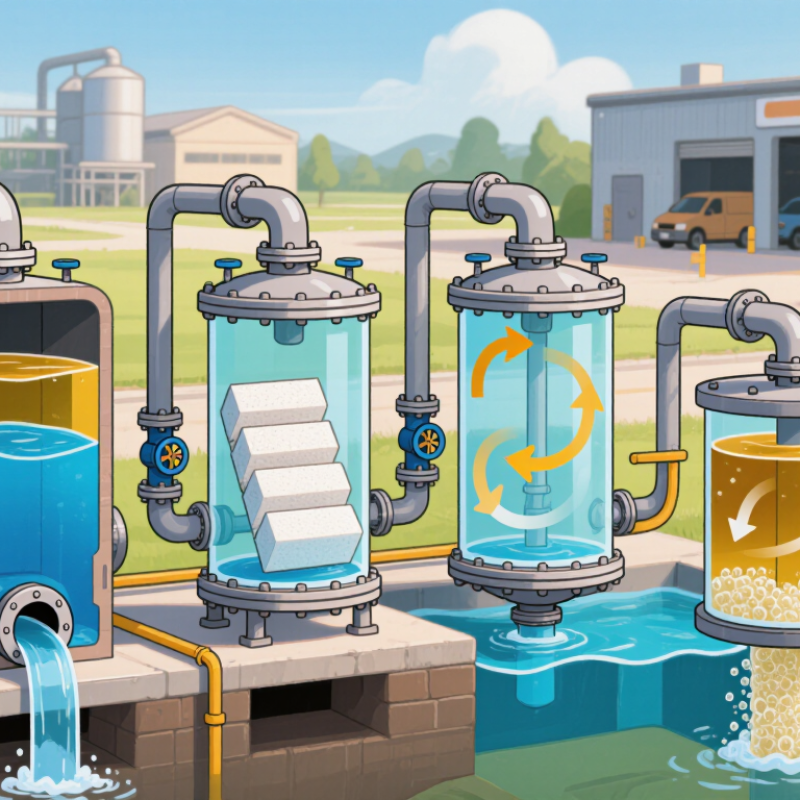
In 2026, global buyers should compare oil separators by operating principle, not appearance alone. Gravity separators slow wastewater inside a settling chamber. Oil droplets rise naturally, while heavier solids sink. They work well with free oil and steady flow rates, but they need space and regular sludge removal. Performance can drop when the water is cold or highly turbulent.

Coalescing separators use plates, cartridges, or specialized media to combine small oil droplets into larger ones. These droplets separate faster and collect at the surface. They suit workshops, factories, and drainage systems with moderate oil loading. Centrifugal separators create rotational force, pushing heavier water outward while lighter oil moves inward. They offer compact treatment, yet require careful flow control. Hydrocyclones also use centrifugal action, but without moving parts. They can handle continuous industrial streams, although very small droplets remain difficult to remove.

Tips: Check the oil droplet size, flow rate, temperature, and expected solids before selecting equipment. Ask for test data using water similar to your actual process. In my experience, buyers often focus on maximum capacity and overlook peak flow surges. That mistake can cause poor separation. No separator is perfect. Maintenance access matters, too. A clogged coalescing pack may quietly reduce efficiency, while a neglected gravity tank can release accumulated oil downstream. Local discharge requirements and trained operators should guide the final design. Conceivably, a slightly larger separator may provide more reliable performance than a cheaper, tightly sized unit.

2026 Best Oil Separator Types for Global Buyers

Indicative minimum oil droplet size typically handled by major separator technologies

How the technologies work: Gravity/API separators reduce flow velocity so free oil rises naturally. Coalescing plate separators combine small droplets into larger droplets for faster separation. Centrifugal separators use rotational force to separate oil from liquid. Hydrocyclones create a high-speed vortex to remove dispersed oil without moving parts. Membrane systems use selective filtration to retain very small oil droplets, although they generally require stronger pretreatment and closer fouling control.

The values are representative engineering ranges rather than guaranteed specifications. Actual performance depends on oil density, viscosity, droplet distribution, temperature, flow rate, solids loading, and system design.

How to Match Oil Separators with Industrial Applications

2026 Best Oil Separator Types for Global Buyers?

How to Match Oil Separators with Industrial Applications

Choosing an oil separator should begin with the process, not the catalogue image. A separator is not selected by pipe size alone. Measure flow rate, oil concentration, droplet size, temperature, pressure, and fluid viscosity. These values reveal whether gravity, coalescing, centrifugal, or vacuum separation will perform reliably. Gravity units suit calm wastewater streams with larger oil droplets. Coalescing models handle smaller droplets and tighter discharge targets. Centrifugal systems fit continuous industrial flows where compact equipment and stable rotation matter.

Know the operating environment. Food-processing wastewater may need smooth surfaces and easy cleaning. Metalworking fluids often carry fine particles, emulsions, and changing oil loads. Marine or workshop drainage can require robust construction and simple sludge removal. Check the separator’s materials against heat, chemicals, corrosion, and pressure. A removable filter can reduce maintenance time, but it may clog quickly when solids are ignored. Small details matter.

I have seen projects fail because the expected oil level was based on a single test. Real production changes. A morning sample may not represent a night shift. Ask for several operating measurements. Allow space for inspection, draining, and safe access. Do not oversize blindly; low flow can reduce separation efficiency. The best selection usually balances removal performance, cleaning frequency, footprint, and total operating cost. Some assumptions will still be wrong. Build a review point into the design.

Key Performance Factors for Comparing Oil Separator Models

2026 Best Oil Separator Types for Global Buyers

Comparing oil separator models requires more than checking the advertised removal rate. Start with flow capacity, inlet oil concentration, droplet size, operating temperature, and pressure drop. Gravity separators suit calm, low-flow streams with larger droplets. Coalescing models often perform better when fine oil droplets require controlled separation. Centrifugal units can handle compact installations, but their energy demand and maintenance needs deserve careful review.

Comparing oil separator models requires more than checking the advertised removal rate.

Material selection also affects reliability. Stainless steel may resist corrosion, while compatible seals help prevent leaks during temperature changes. Ask for test conditions, not only headline efficiency figures. A separator tested at one flow rate may perform differently during peak production. I have seen installations fail because the housing was correctly sized, but the drain system was overlooked. That detail matters.

Tips:

Compare actual operating data with the supplier’s test data. Check pressure loss at normal and maximum flow. Confirm access for filter cleaning, sludge removal, and inspection. Review replacement-part availability in the destination market. Keep a small safety margin, but avoid excessive sizing, which can reduce separation performance. A transparent technical drawing is useful. So is a realistic maintenance schedule. Some buyers focus too heavily on purchase price and later discover higher cleaning costs. That assumption deserves a second look.

Global Buyer Guide to Standards, Costs, and Supplier Selection

Global buyers should match the oil separator to the contaminant, flow rate, and discharge route. Coalescing separators suit compressed-air systems and fine oil aerosols. Gravity and API-type separators fit larger wastewater flows with free oil. Centrifugal units offer compact footprints, but they usually need higher capital and careful maintenance. “Best” depends on operating evidence, not catalogue claims.

Use ISO 8573-1 when buying compressed-air equipment. It defines oil purity classes and testing requirements. For marine discharge, MARPOL Annex I commonly requires treated bilge water below 15 ppm oil. Local wastewater permits may impose stricter limits. The U.S. Department of Energy reports that compressed-air leaks can waste 20–30% of compressor output. Therefore, separator sizing alone will not control energy costs. Request pressure-drop data, test methods, replacement-element prices, and a five-year lifecycle estimate. Installed costs vary widely by flow, materials, automation, and local commissioning.

Tips: Ask suppliers for witnessed test results, not only brochures. Confirm EN 858, API, ISO, or local equivalents before comparing quotations. Check whether sensors need calibration and whether spare elements are stocked nearby. I would avoid choosing the lowest bid without maintenance records. That choice can look efficient initially, but disposal, cleaning, and downtime may change the calculation. Supplier references should include similar feed conditions, not merely similar equipment sizes.

2026 Best Oil Separator Types for Global Buyers — Global Buyer Guide to Standards, Costs, and Supplier Selection
Separator Type Separation Principle Typical Oil Droplet Range Recommended Applications Typical Outlet Performance Approximate Equipment Cost*
(2026 USD)
Key Standards and Compliance Considerations Maintenance and Supplier Selection Priorities
Gravity / API-Type Separator Reduces flow velocity and uses density differences to allow free oil and solids to settle or float. Generally above 150–300 microns Refineries, petrochemical facilities, industrial wastewater pretreatment, workshops and large process drains. Commonly suitable for free oil removal; dissolved and finely dispersed oil normally remains in the water. US$5,000–80,000+ API Publication 421 is widely referenced for gravity oil-water separation design. Local discharge permits, hydraulic design rules and tank safety requirements also apply. Confirm retention time, peak flow, sludge volume, influent oil concentration, access for desludging and corrosion protection.
Coalescing Plate Separator Inclined plates or packs increase effective settling area and coalesce smaller oil droplets into larger droplets. Approximately 20–150 microns Industrial wastewater, parking areas, vehicle maintenance sites, manufacturing plants and compact treatment systems. Often achieves lower suspended oil levels than a simple gravity tank when correctly sized and operated. US$3,000–50,000 EN 858 may apply where the unit is used as a separator for light liquids in drainage systems. Confirm the applicable national or regional certification route. Evaluate plate spacing, removable internals, hydraulic loading, sludge storage, cleaning method and performance at the actual oil viscosity.
Coalescing Filter Separator Fibrous or porous media merge fine oil droplets into larger droplets that can be drained from the liquid stream. Approximately 5–50 microns Compressed-air systems, fuel and lubricant polishing, process-water treatment and fine oil removal after primary separation. Can provide strong removal of dispersed oil, but performance declines when the media is fouled or overloaded with solids. US$1,500–30,000 Pressure-rated housings may require conformity with applicable pressure-vessel rules, such as the ASME Boiler and Pressure Vessel Code or local equivalents. Request differential-pressure limits, media compatibility data, replacement-element availability, drainage design and validated test results.
Centrifugal Oil Separator High rotational force accelerates separation according to density difference between oil, water and solids. Approximately 2–50 microns, depending on design High-throughput coolant systems, metalworking fluids, industrial process water and applications with limited floor space. Good removal of suspended oil and some fine solids; results depend strongly on viscosity, density and flow stability. US$8,000–100,000+ Verify machinery safety, electrical-area classification, pressure ratings, rotating-equipment requirements and local environmental rules. Compare energy consumption, allowable solids loading, vibration control, noise, spare-part lead time and service capability.
Hydrocyclone Uses a pressure-driven vortex to separate phases by density and centrifugal force without moving parts. Typically 10–100 microns, depending on operating conditions Produced-water treatment, offshore and onshore oilfield systems, compact industrial separation and high-flow applications. Effective for dispersed oil and solids when pressure drop and feed conditions remain within the design range. US$10,000–150,000+ Project-specific mechanical, piping, pressure, hazardous-area and offshore requirements may apply. Acceptance testing should be defined contractually. Check minimum pressure drop, turndown ratio, feed solids, material selection, erosion resistance and the supplier’s process guarantees.
Dissolved Air Flotation (DAF) Fine air bubbles attach to oil and suspended solids, lifting them to the surface for skimming. Fine dispersed oil and suspended particles Food processing, refineries, chemical plants, oily wastewater with emulsified or finely dispersed contaminants. Can achieve high removal of suspended solids and dispersed oil when chemical conditioning and flotation are properly controlled. US$30,000–500,000+ Design should address chemical handling, pressure systems, electrical safety, sludge management and local wastewater discharge limits. Review polymer and coagulant demand, recycle ratio, sludge dryness, operator skill requirements, energy use and automation scope.
Membrane Oil-Water Separator Membranes selectively retain oil, solids or water depending on membrane material, pore size and process configuration. Submicron dispersed oil and emulsified contaminants High-quality water reuse, difficult emulsions, final polishing and applications with strict discharge or reuse targets. Potentially the lowest oil concentration among listed technologies, but feed pretreatment and fouling control are essential. US$25,000–500,000+ Confirm membrane-material compatibility, pressure-vessel compliance, electrical requirements, wastewater permits and validated permeate quality. Prioritize fouling-control data, cleaning chemicals, membrane replacement cost, recovery rate, reject-stream handling and lifecycle cost.
Gravity Drainage Separator for Light Liquids Uses gravity separation in a buried or above-ground drainage chamber to retain hydrocarbons lighter than water. Free oil and fuel droplets, generally larger droplets Vehicle parking areas, garages, service yards, workshops, fuel-handling areas and stormwater drainage systems. Designed primarily for free-light-liquid capture rather than treatment of stable emulsions or dissolved hydrocarbons. US$1,000–20,000 EN 858-1 and EN 858-2 are commonly used in Europe for light-liquid separators, including design, testing, installation and maintenance principles. Verify nominal size, bypass arrangement, alarm requirements, cover loading class, groundwater conditions and access for inspection.
Vacuum Oil Mist Separator Removes liquid droplets and oil mist from air or vacuum exhaust using impingement, coalescing or filter media. Submicron to several microns in air streams Vacuum pumps, machining equipment, lubrication systems, compressors and industrial ventilation. Reduces visible oil mist and protects downstream equipment; exact efficiency depends on airflow and filter loading. US$500–15,000 Check pressure-vessel, machinery, worker-exposure, fire-safety and electrical requirements relevant to the installation location. Compare airflow capacity, pressure drop, oil return design, filter life, temperature limit, noise and replacement-element logistics.
Global Buyer Selection Matrix
For free oil and low operating cost Gravity / APIDrainage Separator Best when oil droplets are relatively large, the flow is predictable and sufficient footprint is available. Lowest initial complexity Confirm that the target is free-oil capture rather than dissolved or emulsified oil removal.
For compact industrial pretreatment Coalescing PlateCoalescing Filter Suitable when floor space is limited and the feed contains dispersed oil but manageable solids. Moderate capital cost Ask for hydraulic loading, influent test conditions, cleaning intervals and replacement-media pricing.
For fine dispersed oil HydrocycloneCentrifugal Appropriate for pressurized or high-throughput systems where density difference and stable operating conditions are available. Moderate to high energy demand Require performance data at the actual oil density, viscosity, temperature, flow rate and pressure drop.
For emulsified oil and strict discharge limits DAFMembrane Preferred when conventional gravity separation cannot achieve the required outlet quality. Highest lifecycle complexity Evaluate chemicals, energy, sludge or concentrate disposal, operator training and long-term consumables.
Minimum Supplier Data Required Before Purchase
Process information Average flow, peak flow, temperature, pressure, oil type, oil density, oil viscosity, solids concentration and emulsion stability. The supplier should state all design assumptions and identify which parameters are measured rather than estimated. Mandatory Incomplete feed data is a major cause of poor separator performance and unexpected operating cost.
Performance guarantee Outlet oil concentration, suspended-solids target, test method, sampling point, allowable flow range and commissioning conditions. Guarantees should be linked to a defined influent quality and a documented acceptance-test procedure. Contract-critical Avoid guarantees based only on nominal capacity or generic removal percentages.
Total cost of ownership Purchase price, freight, import duties, installation, civil works, electricity, chemicals, media, sludge disposal and spare parts. A low purchase price may result in higher lifecycle cost when consumables, cleaning and downtime are included. Compare over 5–10 years Request a clear bill of materials, consumables schedule, warranty terms and service-response commitment.
*Indicative equipment-only price ranges in 2026 USD for general international purchasing. Actual prices vary substantially with capacity, materials, automation, pressure rating, hazardous-area classification, certifications, freight, installation and local taxes. Droplet ranges and outlet performance are typical engineering ranges, not universal guarantees; final selection should be based on laboratory testing, pilot testing or a supplier performance guarantee using the buyer’s actual wastewater or air-stream data.

Article Source: