2026 Best Solutions for Automation to Enhance Business Efficiency
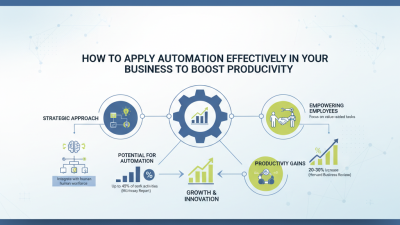
In an increasingly competitive environment, organizations seek effective solutions for automation. According to a report by McKinsey, automation can increase productivity by up to 30%. This potential drives many industries to invest in advanced tools and technologies. Businesses are transforming their operations to streamline processes and reduce costs.
Many companies still struggle to implement automation effectively. A study from Deloitte shows that 33% of organizations face challenges in scaling automation initiatives. Common hurdles include lack of technical skills and resistance to change. Addressing these issues is crucial for maximizing the benefits of automation.
Successful automation requires careful planning and execution. Companies must evaluate their specific needs and select the right solutions for automation. Tailored approaches can lead to significant improvements in efficiency. By adopting these strategies, businesses can not only enhance operational performance but also gain greater competitiveness in their fields.

Overview of Automation Technologies in 2026
In 2026, automation technologies are reshaping how businesses operate. From advanced robotics to artificial intelligence, organizations are pushing boundaries. These technologies simplify tasks, reduce errors, and save time. Companies increasingly rely on automation to handle repetitive duties. Employees can then focus on strategic initiatives, fostering creativity and innovation.
However, the journey is not without challenges. Many businesses struggle with integration. Existing systems may clash with new technologies. This mismatch can lead to confusion and inefficiencies. Training staff is also a hurdle. Employees may resist change and feel overwhelmed by automation. A careful approach is necessary to ensure smooth transitions.
Data analytics is a prime area for advancement in 2026. By harnessing data, businesses can identify patterns and improve decision-making. Yet, reliance on automation can also lead to data privacy concerns. Customers are wary of how their information is used. Organizations must navigate these issues thoughtfully while pursuing efficiency.
2026 Best Solutions for Automation to Enhance Business Efficiency
This chart illustrates the projected adoption rates of various automation technologies in 2026. The data reflects the increasing emphasis on automation to enhance business efficiency across different sectors.
Key Benefits of Automation for Business Efficiency
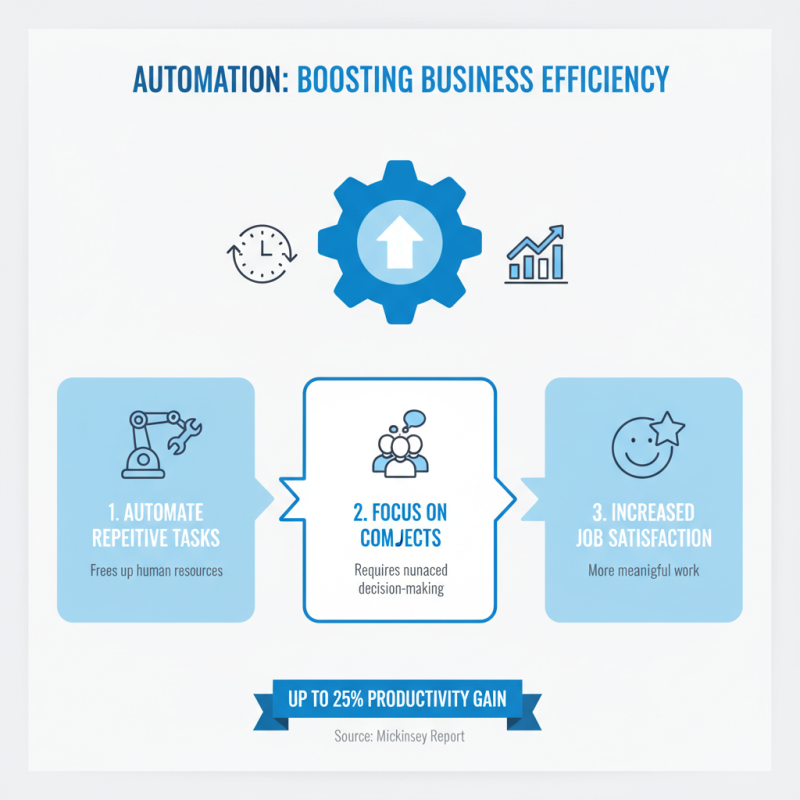
Automation has become a crucial element for businesses aiming to boost efficiency. According to a recent report by McKinsey, companies can increase productivity by up to 25% through effective automation strategies. Automating repetitive tasks helps in reallocating human resources to more complex projects, which often require nuanced decision-making. This shift can lead to better job satisfaction among employees, as they engage in more meaningful work.
One significant benefit of automation is error reduction. A study from the Brookings Institution highlighted that automation can decrease human errors by nearly 30%. Fewer mistakes mean better product quality and enhanced customer satisfaction. However, some businesses struggle with implementation. They may not invest enough in training staff. Poor understanding of the technology can result in underutilization of automation tools.
Tips: Assess your current operational workflows. Identify repetitive tasks that can be automated. Invest time in training your team on new systems. Also, check for gaps in feedback. Gathering insights from staff can enhance the automation experience. Engaging them early can mitigate resistance and improve rollout success.
Emerging Trends in Automation Solutions for 2026
In 2026, automation solutions will be more crucial than ever. Businesses will seek ways to boost efficiency while minimizing costs. Emerging trends show a shift towards AI-driven tools that adapt to user needs. This personalization is essential. However, these systems require significant data input, raising privacy concerns. Organizations must navigate these challenges carefully.
RPA, or robotic process automation, will play a vital role. It streamlines repetitive tasks, freeing up human talent for complex issues. Yet, many companies struggle to implement RPA effectively. Often, poor integration leads to more confusion, not less. Training staff to work alongside automation is essential but often overlooked.
Another trend is the rise of low-code platforms. These empower non-technical users to create applications quickly. But, the risk of creating poorly designed apps increases. Over-dependence on such tools can stifle innovation. Businesses need to maintain a balance between user-driven solutions and professional oversight. As automation evolves, thoughtful implementation will be key to success.
2026 Best Solutions for Automation to Enhance Business Efficiency
| Automation Solution |
Industry Application |
Expected Impact |
Emerging Trend |
| AI-driven Process Automation |
Manufacturing |
Increase production efficiency by 30% |
Integration of AI and IoT |
| Robotic Process Automation (RPA) |
Finance |
Reduce operational costs by 25% |
Cloud-based RPA solutions |
| Intelligent Document Processing |
Healthcare |
Speed up patient data processing by 40% |
AI-based data extraction |
| Chatbots and Virtual Assistants |
Customer Service |
Enhance customer satisfaction by 20% |
Conversational AI advancements |
| Supply Chain Automation |
Logistics |
Improve delivery times by 50% |
End-to-end visibility and tracking |
Best Automation Tools and Software for Different Industries
Automation tools are transforming various industries, boosting productivity and efficiency. Businesses that embrace these innovations often see impressive results.
Different sectors require tailored solutions, making it crucial to identify the right tools.
In manufacturing, automation software can streamline production lines. Simple bots can handle repetitive tasks. This can lower human error and increase output speed.
However, it's important to ensure that the workforce is trained to collaborate with machines. A poorly implemented system can lead to frustration and inefficiencies.
In the service industry, customer service automation can enhance responsiveness. Chatbots and automated email systems can provide instant support.
However, personal touch matters. Over-reliance on automation can alienate customers. Businesses should balance technology and human interaction carefully.
Tips: Always assess employee feedback on automation tools. Regular training sessions can help teams adapt. Evaluate results consistently to ensure effectiveness.
Choose solutions that fit your unique needs rather than following trends blindly.
Case Studies: Successful Implementation of Automation in Businesses
Automation has revolutionized how businesses operate. Many companies have embraced automation to streamline processes and increase productivity. For instance, a retail business implemented an automated inventory system. This reduced errors in stock management. However, they initially faced challenges in integrating the new system with existing tools.
Another example comes from the manufacturing sector. A factory adopted robotic process automation to optimize assembly lines. This change led to increased output and reduced labor costs. Yet, workers had concerns about job security and retraining. Addressing these fears required open communication and support from management.
These case studies highlight the practical benefits of automation. They also show that successful implementation is not always smooth. Businesses must be prepared to adapt and learn from mistakes. Automation can drive efficiency, but it requires careful planning and consideration of human factors.